
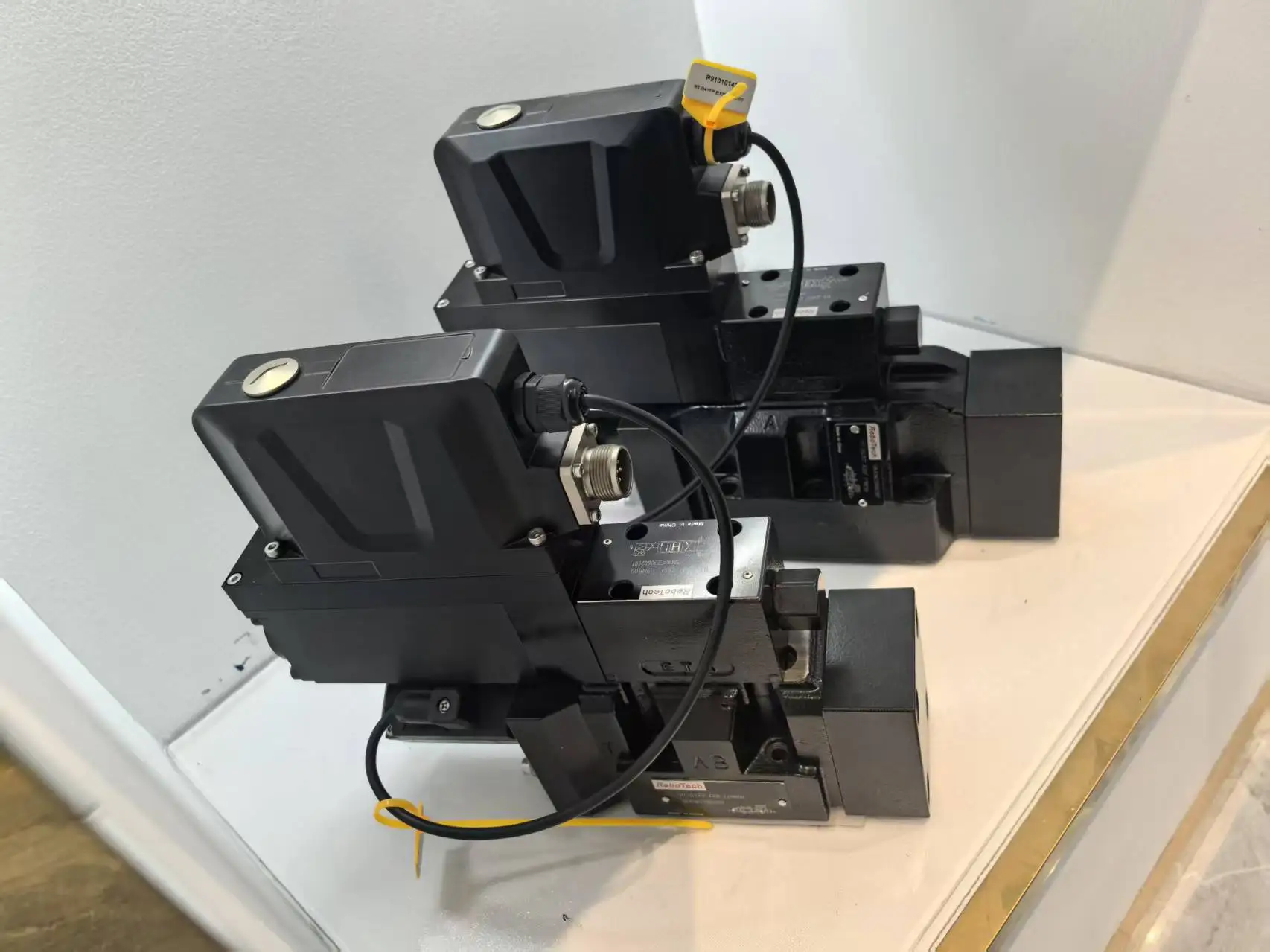
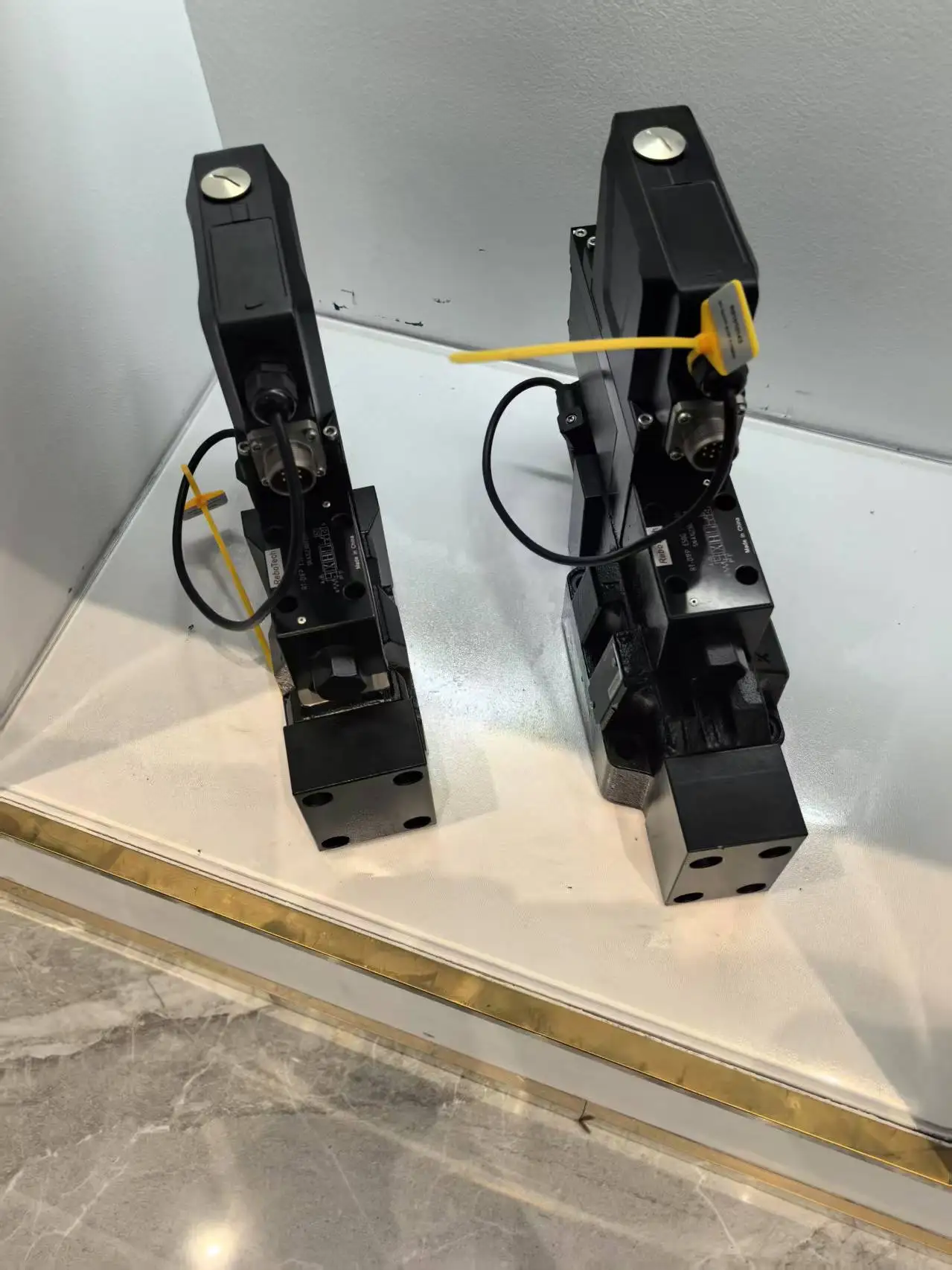

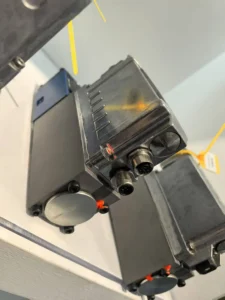


Product Overview
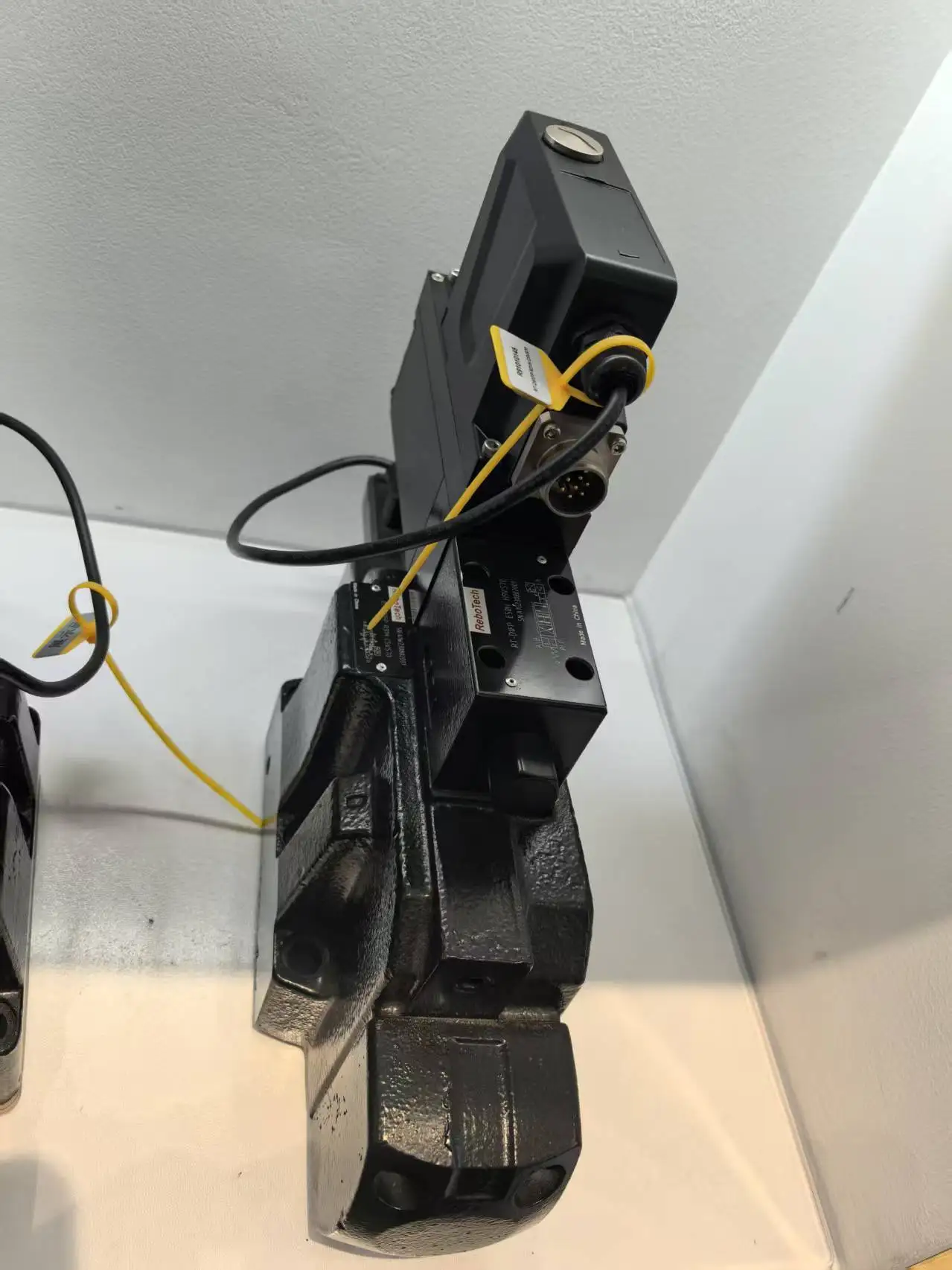
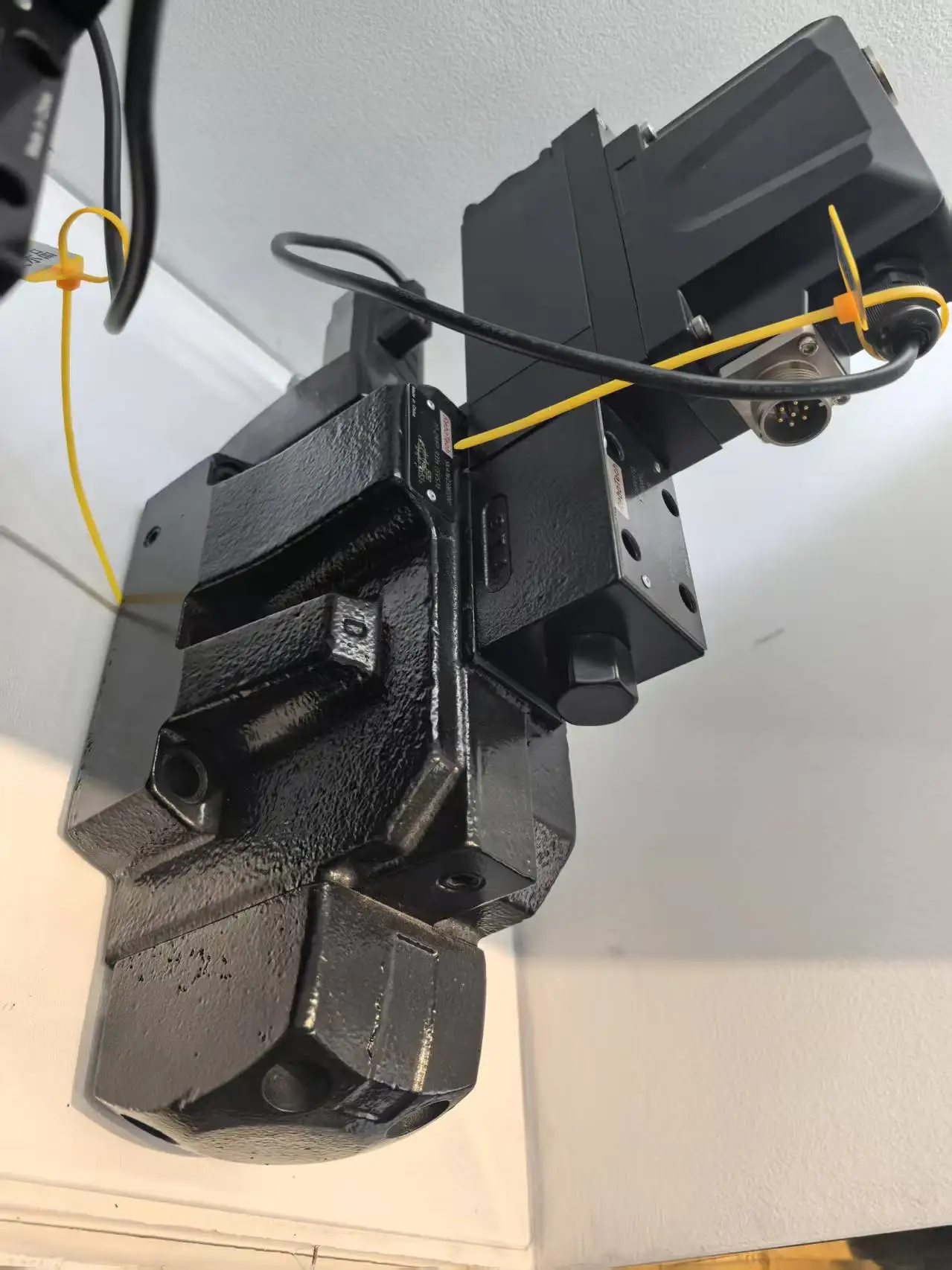
The Parker D1FVE02BCVF0A37 is a direct-operated proportional pressure reducing valve from the Parker D1FV family.
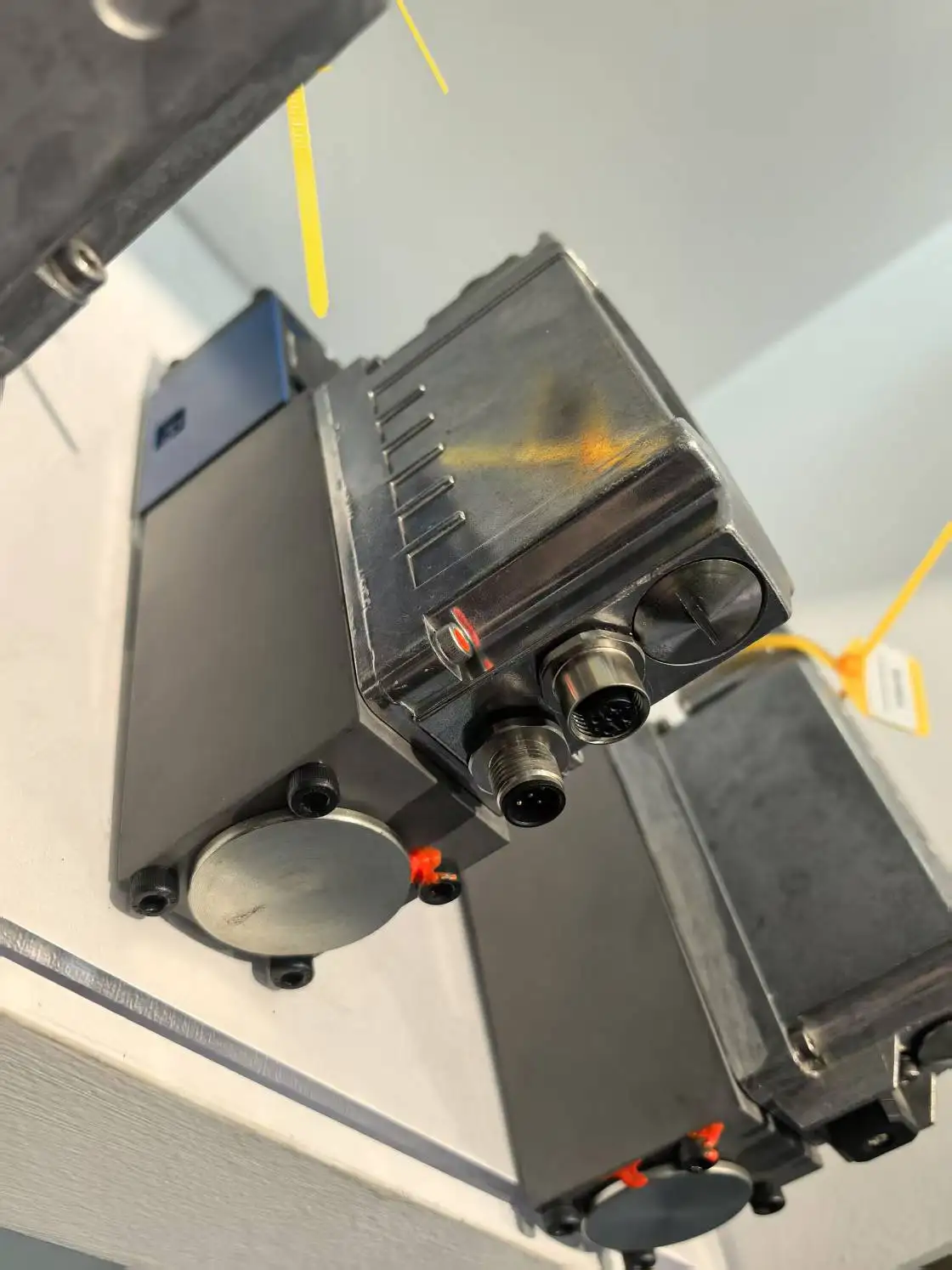
It should not be classified as a three-way directional proportional valve. Parker’s official D1FV documentation defines the family as proportional pressure reducing valves using a proportional solenoid and barometric feedback to regulate pressure at the A or B port. The family is available in versions with external electronics and onboard electronics (OBE).
The exact historical part number D1FVE02BCVF0A37 is directly searchable in several industrial spare-parts databases, confirming it as an established Parker legacy model.
However, the current Parker public catalog does not reproduce this complete historical ordering string character by character. Therefore, unsupported decoding of the individual legacy suffixes is intentionally avoided.
The verified D1FV platform characteristics include:
- Direct-operated proportional pressure reducing design
- NG6 / CETOP 03 / NFPA D03
- Proportional solenoid actuation
- Barometric feedback
- 350 bar maximum operating pressure at P/A/B
- 185 bar maximum T-port pressure
- 10 L/min maximum flow
- 30 bar minimum primary pressure
- ISO 4406 Class 18/16/13 cleanliness.
A critical distinction is that 350 bar is the maximum operating pressure, not the adjustable pressure range. Parker’s current D1FV catalog lists standard pressure ranges of 25 bar and 45 bar.
Some third-party records for the historical D1FVE02BCVF0A37 describe “10 / 350 bar,” but this does not fully agree with the currently published Parker D1FV pressure-range data. The exact legacy pressure range should therefore be verified from the original nameplate or historical Parker documentation before procurement.
Technical Specifications
D1FVE02BCVF0A37
- Model: D1FVE02BCVF0A37
- Manufacturer: Parker Hannifin
- Series: D1FV
- Valve Type: Direct-operated proportional pressure reducing valve
- Actuation: Proportional solenoid
- Feedback: Barometric feedback
- Nominal Size: NG6
- Interface: CETOP 03 / NFPA D03
- Mounting: Subplate mounting
- Mounting Position: Unrestricted
- Maximum Operating Pressure, P/A/B: 350 bar
- Maximum T-Port Pressure: 185 bar
- Maximum Flow: 10 L/min
- Minimum Primary Pressure: 30 bar
- Permitted Viscosity: 20–380 cSt
- Recommended Viscosity: 30–80 cSt
- Hydraulic Fluid Temperature: -20 to +40 °C
- Hydraulic Fluid: Hydraulic oil according to DIN 51524/51535
- Fluid Cleanliness: ISO 4406 Class 18/16/13
- Hysteresis: <4%
- Solenoid-current temperature drift: <0.02%/K
- Duty Cycle: 100% ED
- Maximum Coil Temperature: approximately 150 °C warning level
- Protection: IP65 with correctly installed compliant connector
- Standard D1FV Pressure Ranges: 25 bar and 45 bar
- Exact Legacy Pressure Range: Not independently confirmed from the current Parker public catalog for this complete historical part number; one inventory record states 10/350 bar, which conflicts with the current 25/45 bar family pressure-range information.
- Displacement: Not applicable
- Maximum Speed: Not applicable
- Peak Pressure: No independent peak-pressure rating is specified by Parker; selection should be based on maximum operating pressure and verified pressure range
- Weight: Current D1FV OBE documentation lists approximately 2.9 kg for the series; a historical stock listing gives 2.688 kg for the exact part. The latter should not be presented as an official current Parker net-weight value without configuration confirmation.
Key Technical Advantages
1. Direct proportional pressure control
The D1FV uses a proportional solenoid to control pressure continuously.
Unlike an on/off directional valve, the D1FV can adjust the regulated pressure in response to an electrical command, making it suitable for pressure-control branches, clamping systems and automated hydraulic processes.
2. Barometric feedback principle
Parker’s D1FV architecture uses barometric feedback for pressure regulation.
Parker identifies high valve-to-valve repeatability and low hysteresis as major advantages of the D1FV family.
3. Standard NG6 / CETOP 03 interface
The D1FV uses:
- NG6
- CETOP 03
- NFPA D03
standard mounting interfaces.
This simplifies integration into existing hydraulic manifolds and subplates and supports replacement engineering.
4. 350 bar hydraulic pressure capability
Parker specifies:
- 350 bar at P/A/B
- 185 bar at T.
This provides a robust high-pressure platform for industrial hydraulic applications.
However, the 350 bar figure is the valve’s maximum operating pressure rather than its adjustable pressure range.
5. 10 L/min pressure-control flow capability
The published D1FV maximum flow is 10 L/min.
This confirms that the D1FV is primarily a proportional pressure-control component rather than a high-flow main directional valve.
6. Low hysteresis
Parker specifies D1FV hysteresis at <4%.
This supports more repeatable pressure settings during repeated command changes.
7. High valve-to-valve repeatability
Parker specifically lists high repeatability from valve to valve as a D1FV advantage.
This is particularly useful in OEM production where multiple machines are expected to maintain comparable pressure-control behavior.
8. Onboard electronics option
The D1FV family is available with both external electronics and onboard electronics (OBE).
Parker describes the OBE design as a digital electronics module integrated into a robust metal housing, with RS-232 parameterization.
9. Precision pressure-control construction
Long-term performance depends on:
- spool-to-bore accuracy
- metering geometry
- surface finish
- internal leakage
- electromagnetic consistency
- feedback consistency
For replacement manufacturing, external dimensional replication alone is insufficient.
10. Suitable for legacy OEM replacement
The complete part number D1FVE02BCVF0A37 is present in multiple industrial spare-parts databases, indicating clear legacy replacement demand.
Our replacement engineering can target:
- mounting compatibility
- hydraulic-function compatibility
- pressure-range matching
- electrical-interface matching
- seal compatibility
- dynamic pressure performance
Each replacement product can then undergo 100% simulated operating-condition testing.
Application Areas
Because the D1FV is a proportional pressure reducing valve, its primary applications are pressure-control circuits rather than conventional directional switching.
Typical applications include:
- Industrial hydraulic power units
- Hydraulic clamping systems
- Precision tooling
- Machine-tool auxiliary pressure circuits
- Injection-molding auxiliary hydraulics
- Plastic-processing machinery
- Automated hydraulic control modules
- Low-flow proportional pressure circuits
- Pressure-setting modules
- Hydraulic test equipment
- Legacy Parker hydraulic systems
- OEM replacement hydraulic assemblies
For high-flow actuator direction control, a dedicated proportional or directional valve with the appropriate flow capacity should be selected instead.
Expert Maintenance Tips
1. Verify the exact pressure range first
This is the most important issue for this legacy model.
Parker’s current D1FV documentation lists:
- 25 bar
- 45 bar
standard pressure ranges.
A third-party listing for the historical D1FVE02BCVF0A37 states “10 / 350 bar.”
Because the information is inconsistent, procurement should verify:
- original nameplate
- historical Parker datasheet
- material number
- pressure-range marking
before selecting the replacement.
2. Do not confuse maximum pressure with pressure range
The valve can have:
350 bar maximum operating pressure
while having a much lower:
adjustable pressure range
These are different engineering parameters and should never be merged in product marketing.
3. Maintain sufficient primary pressure
Parker specifies a 30 bar minimum primary pressure.
When the upstream pressure is insufficient, correct electrical control may still fail to produce the expected regulated pressure.
4. Maintain ISO 4406 Class 18/16/13 cleanliness
The published D1FV cleanliness requirement is:
ISO 4406 Class 18/16/13
Contamination can cause:
- pressure drift
- sluggish response
- increased hysteresis
- unstable regulated pressure
- internal leakage
5. Monitor T-port back pressure
The T-port maximum is 185 bar.
Return-line pressure should therefore be evaluated during dynamic operation, especially when several hydraulic valves share a common return manifold.
6. Verify the command-signal configuration
Parker documents multiple D1FV OBE input options, including:
- ±10 V
- 4–20 mA
- ±20 mA
and distinguishes P→A versus P→B functions through the ordering code.
For this legacy part, the exact signal configuration should be confirmed from the original wiring documentation or nameplate instead of being inferred solely from the historical code.
7. Use the correct RS-232 parameterization method
D1FV OBE versions use an RS-232 parameterization interface.
Service personnel should use the correct interface hardware rather than applying an arbitrary USB connection to the electronics.
8. Consider coil temperature correctly
Parker warns that coil temperature can reach approximately 150 °C.
High coil temperature should therefore be diagnosed together with supply voltage, ambient temperature, switching conditions and mechanical resistance rather than being treated as automatic evidence of coil failure.
9. Perform stepped pressure testing after replacement
A recommended commissioning sequence is:
- 0% command
- 25% command
- 50% command
- 75% command
- 100% command
while monitoring:
- primary pressure
- regulated pressure
- T-port pressure
- oil temperature
- command signal
For our OEM replacement products, 100% simulated operating-condition testing can be used to validate the complete operating envelope before shipment.