

Product Overview
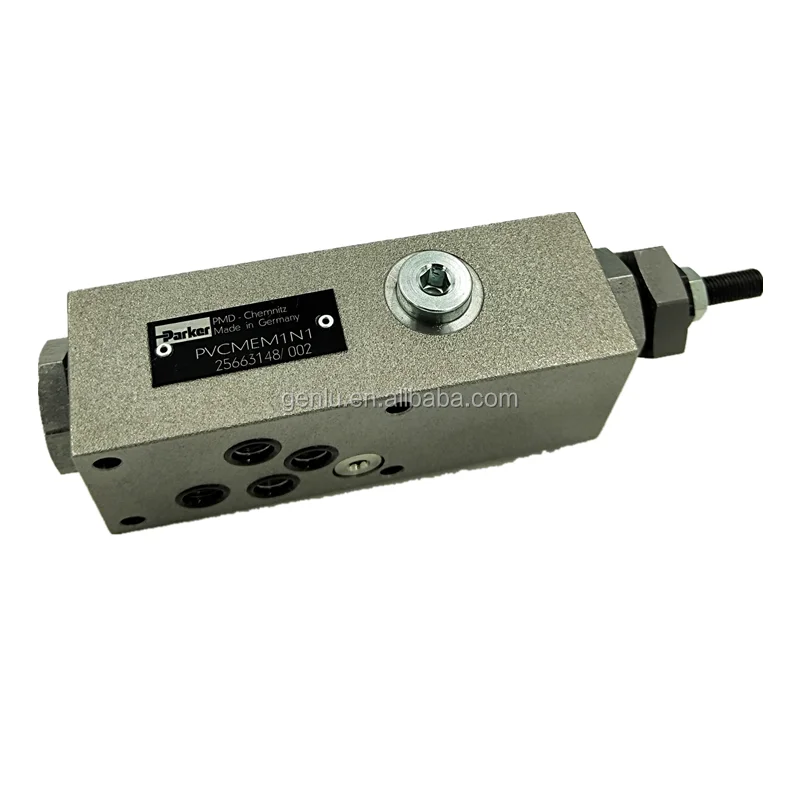
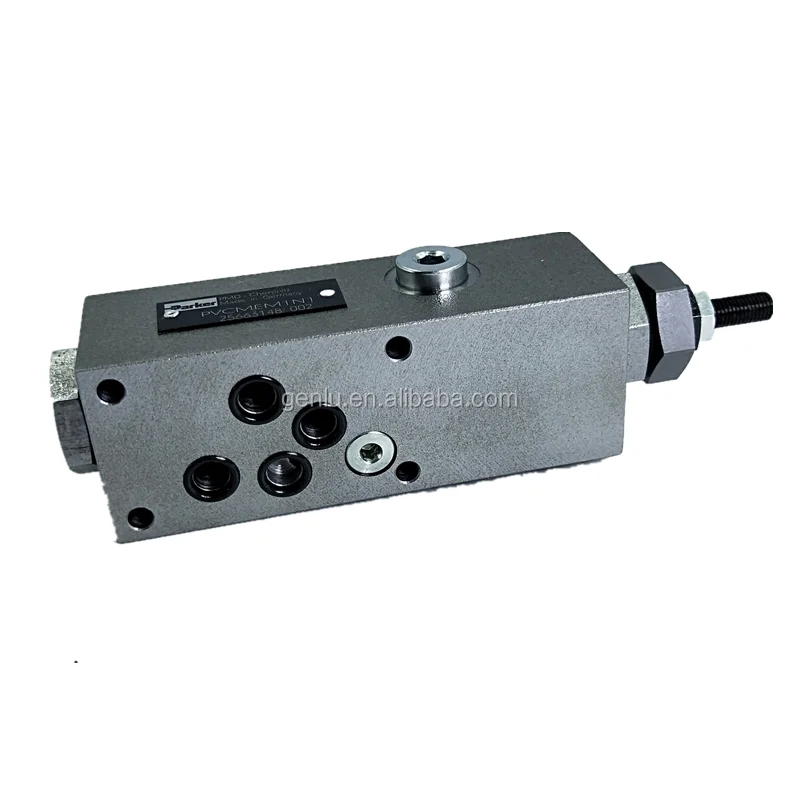
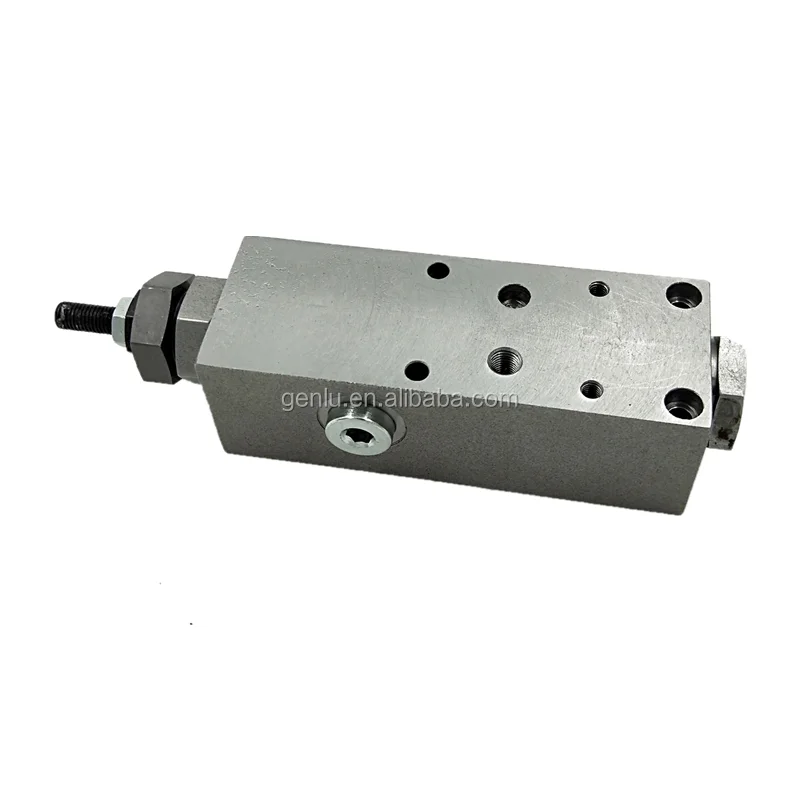
The Parker PVCMEMCN3 is a Remote Pressure Compensator associated with Parker PV/PVplus variable-displacement axial piston pump control systems.
It should not be classified simply as a conventional standalone pressure-regulating or directional valve. Its primary function is to participate in the pump’s hydraulic control circuit and influence pump displacement according to system pressure demand.
Parker’s official PVplus documentation identifies the PVCM family as a compensator option for Series 45 and larger pumps, with frame-dependent configurations covering PV016–046, PV063–092 and PV140–360. The official catalog lists the corresponding standard PVCM configurations as pressure-compensated controls and separately identifies remote pressure compensator configurations.
Public Parker parts data identifies PVCMEMCN3 as a Remote Compensator / Compensator Design 45.
The typical control chain is:
System Pressure → Remote Pressure Sensing → Compensator → Pump Control Circuit → Swashplate Movement
This allows the variable-displacement pump to reduce displacement when system pressure reaches the required operating condition.
Technical Specifications
PVCMEMCN3
- Manufacturer: Parker Hannifin
- Product Family: PVCM
- Product Type: Remote Pressure Compensator
- Compensator Design: Design 45 according to available Parker parts identification
- Application: Parker PV / PVplus variable-displacement axial piston pumps
- Control Function: Remote hydraulic pressure compensation
- Associated Pump Frame Family: Parker’s official PVCM “E” family is associated with PV140–360 in the corresponding standard configuration.
- Pump Displacement: Not a standalone specification of the compensator
- Compensator Rated Pressure: Not independently confirmed in publicly accessible Parker OEM documentation
- Compensator Peak Pressure: Not independently confirmed
- Maximum Speed: Determined by the complete pump configuration, not by the compensator alone
- Control Method: Hydraulic-mechanical remote pressure compensation
- Remote Pressure Sensing: Yes
- OEM Weight: Not confirmed in current accessible Parker OEM documentation
- OEM Material Grade: Not publicly confirmed for the exact part number
Parker PVplus System Context
Parker currently describes the PVplus family as high-pressure open-circuit variable-displacement axial piston pumps with:
- Displacement Range: 16–360 cc/rev
- Maximum Pressure: up to 420 bar
- Continuous Pressure: 350 bar
- Pump Type: Variable-displacement axial piston
- Control Options: Pressure control, load-sense, HP/torque control and electro-hydraulic/proportional displacement control
- Target Applications: Heavy-duty industrial and marine systems
These are pump-family specifications and must not be interpreted as standalone PVCMEMCN3 pressure or speed ratings.
Parker PVCM Family Configuration
Parker’s official PVplus catalog identifies frame-specific PVCM configurations:
PV016–046
- PVCMAMCN1 — Pressure Compensated – MMC
- PVCMARCN1 — Remote Pressure Compensator
PV063–092
- PVCMCMCN1 — Pressure Compensated – MMC
- PVCMCRCN1 — Remote Pressure Compensator
PV140–360
- PVCMEMCN1 — Pressure Compensated – MMC
- PVCMERCN1 — Remote Pressure Compensator
Public parts data also identifies PVCM variants such as:
- PVCMAMCN3 — Compensator Design 45
- PVCMCMCN3 — Remote Compensator
- PVCMEMCN3 — Remote Compensator
This demonstrates why the complete pump model and control code must be checked before selecting a replacement.
Key Technical Advantages
1. Remote Pressure Compensation
The main engineering advantage of PVCMEMCN3 is its remote pressure-compensation architecture.
The control sequence can be represented as:
System Pressure → Remote Sensing → Compensator Response → Pump Control Pressure → Swashplate Movement
As pressure demand is satisfied, the pump can destroke and reduce displacement.
2. Variable-Displacement Pump Integration
Parker’s PVplus range supports pressure, load-sense, HP/torque and electro-hydraulic control options.
The compensator operates as part of this broader variable-pump control architecture rather than as a simple standalone pressure valve.
3. Power-Efficient Pressure Control
Variable displacement allows the pump to reduce output displacement when full flow is no longer required.
The basic logic is:
High Demand → Higher Displacement
Pressure Reached → Lower Displacement
This can reduce unnecessary flow generation and throttling losses in high-power hydraulic systems.
4. Design 45 Compensation Platform
Available Parker parts information associates many PVCM products with Compensator Design 45.
This provides a common control architecture across different PV pump frame sizes while maintaining separate model codes for specific pump configurations.
5. Precision Hydraulic Control
Compensator performance depends on:
- Spool-to-bore clearance
- Spring preload
- Orifice geometry
- Pressure sensing passages
- Valve-seat condition
- Surface finish
- Seal integrity
This is why a professional replacement must be validated hydraulically rather than judged only by dimensional compatibility.
Engineering Materials and Manufacturing
Parker’s publicly accessible OEM documentation does not provide enough information to certify the exact alloy grades, hardness or heat-treatment specifications of PVCMEMCN3.
Therefore, material claims such as a specific stainless-steel grade or aluminum alloy should not be published without additional OEM evidence.
For a replacement compensator, the most relevant manufacturing controls are:
Precision Spool
Controlled spool-to-bore clearance affects leakage, friction and response stability.
Spring Calibration
Spring preload directly influences the compensation setting and must be verified during functional testing.
Orifice Accuracy
Small hydraulic orifices influence response speed and damping.
Surface Finish
Surface quality affects friction, contamination sensitivity and leakage.
Seal Integrity
O-rings and hydraulic sealing surfaces must maintain reliable isolation throughout the control circuit.
Application Areas
Parker PVplus compensator technology is applicable to:
- Industrial hydraulic power units
- Machine tools
- Metal forming equipment
- Injection molding machines
- Steel mills
- Test rigs
- Integrated hydraulic systems
- Construction machinery
- Mining equipment
- Marine hydraulic systems
- Oil and gas equipment
- Marine lifts and hoists
- Winches and cranes
- Heavy material-handling systems
Parker currently positions PVplus for demanding industrial and marine applications, including process/material forming machinery, test rigs and HPUs, steel mills, oil & gas systems, marine lifting equipment and mining drilling equipment.
Expert Maintenance Tips
Verify the Complete Pump Configuration
Before replacing PVCMEMCN3, confirm:
Pump Model + Displacement + Frame Size + Control Code + Compensator Part Number + Pressure Setting + Remote Sensing Configuration
The PVCMEMCN3 number alone is not sufficient for reliable interchangeability.
Inspect the Remote Sensing Circuit
Check for:
- Blockage
- Restrictions
- External leakage
- Incorrect hose routing
- Air ingress
- Contamination
A sensing-line problem may produce symptoms similar to compensator failure.
Verify Pump Destroke Response
During rising pressure:
Pressure ↑ → Pump Displacement ↓
During decreasing pressure:
Pressure ↓ → Pump Displacement ↑
Failure of this relationship requires investigation of the compensator and the downstream servo/control mechanism.
Maintain Clean Hydraulic Oil
Inspect:
- Hydraulic filters
- Control passages
- Orifices
- Servo circuits
- Remote pressure lines
- Seal interfaces
Contamination can cause spool sticking, unstable pressure response and abnormal compensation behavior.
Do Not Cross-Match Frame Sizes
Parker’s official documentation separates PVCM controls by PV pump frame size, including:
PVCMAMCN1 → PV016–046
PVCMCMCN1 → PV063–092
PVCMEMCN1 → PV140–360.
A similar-looking compensator should not be assumed to be interchangeable without complete configuration verification.
Recommended Replacement Validation
A professional replacement process should include:
Visual Inspection → Dimensional Verification → Seal Inspection → Adjustment Verification → Pressure Response Test → Remote Sensing Test → Dynamic Compensation Test → Pump Destroke Test → Full Simulated Working-Condition Test
For aftermarket applications, in-place interchangeability verification and 100% simulated working-condition testing can be used as strong engineering quality differentiators, provided they are presented as your own replacement validation process rather than Parker OEM specifications.