


A6VM160HA1T/63W Rexroth Bent Axis Motor 160cc 400Bar Variable Displacement
| Model Number | A6VM160HA1T/63W-VZB380A-SK |
|---|
SKU
N/A
Categories Hydraulic Motor, Piston Motor
Tags 1hp motor, 3 hp motor, 5rpm motor, abb motor, ac motor, air motor, fan motor, ge motor, motor, spg motor, sym motor, vem motor, weg motor, ydk motor, zd motor
Product Description
Product Overview
The A6VM Series variable displacement axial piston motor is a high-pressure hydraulic motor platform from Bosch Rexroth, widely deployed in mobile machinery and stationary equipment. The motor features an axial tapered piston rotary group of bent-axis design, suitable for hydrostatic drives in both open and closed circuits. The series covers displacements from 28 to 1,000 cm³/rev. Sizes 28 through 200 achieve a nominal pressure of 400 bar with peak pressure up to 450 bar, while sizes 250 through 1,000 operate at 350 bar nominal with 400 bar peak. The wide control range enables the variable motor to satisfy requirements for both high speed and high torque.
The specific models covered in this document — A6VM160HA1T/63W-VZB380A-SK and A6VM160HA2/63W-VAB020A-S — are both A6VM160 frame size configurations (160 cm³/rev displacement) within the Series 63 standard range. At maximum displacement, the A6VM160 achieves a nominal speed of 3,100 rpm, maximum inlet flow of 496 L/min, and output torque of 1,019 Nm at a pressure differential of 400 bar. These motors are manufactured to original Rexroth specifications with 100% drop-in interchangeability, requiring no modification to mounting interfaces, port positions, or hydraulic connections. Every unit undergoes 100% simulated operating condition testing at the factory, including rated pressure loading, volumetric efficiency verification, control response characterization, and seal integrity assessment prior to shipment.
Model code breakdown: A6VM160 — A6VM designates the bent-axis variable displacement motor series, 160 indicates a maximum displacement of 160 cm³/rev; HA1T and HA2 denote two different automatic high-pressure related control modes; 63W specifies the Series 63 standard range and mounting configuration; VZB380A and VAB020A define port locations, control valve body, and additional feature configurations; -SK and -S are special option identifiers.
Technical Specifications
A6VM160HA1T/63W-VZB380A-SK:
Series / Type: Rexroth A6VM bent-axis axial tapered piston variable motor, Series 63
Maximum displacement: 160 cm³/rev
Minimum displacement: 0 cm³/rev (Vg min = 0, steplessly adjustable to zero)
Nominal pressure (continuous): 400 bar (40 MPa)
Maximum pressure (intermittent): 450 bar (45 MPa)
Maximum speed at Vg max: 3,100 rpm
Maximum speed at Vg < Vg max: 4,900 rpm
Maximum inlet flow: 496 L/min
Output torque at Δp = 400 bar: 1,019 Nm
Torque constant: 2.54 Nm/bar
Control type: HA1T automatic high-pressure related control with hydraulic override (T-type), external X pilot port
Control start pressure range: 80–350 bar (adjustable)
HA1T control characteristic: displacement from Vg min to Vg max requires only approximately 10 bar pressure change
Mounting: SAE flange mount
Port configuration: VZB configuration, side ports
Direction of rotation: Bidirectional
Housing material: High-strength cast iron
Approximate weight: 64 kg
A6VM160HA2/63W-VAB020A-S:
Series / Type: Rexroth A6VM bent-axis axial tapered piston variable motor, Series 63
Maximum displacement: 160 cm³/rev
Minimum displacement: 0 cm³/rev (Vg min = 0, steplessly adjustable to zero)
Nominal pressure (continuous): 400 bar (40 MPa)
Maximum pressure (intermittent): 450 bar (45 MPa)
Maximum speed at Vg max: 3,100 rpm
Maximum speed at Vg < Vg max: 4,900 rpm
Maximum inlet flow: 496 L/min
Output torque at Δp = 400 bar: 1,019 Nm
Torque constant: 2.54 Nm/bar
Control type: HA2 automatic high-pressure related control, positive control (pressure-increase control)
Control start pressure range: 80–350 bar (adjustable)
HA2 control characteristic: displacement change requires approximately 100 bar pressure variation, suited for speed/torque modulation under heavy-load conditions
Mounting: SAE flange mount
Port configuration: VAB configuration, side ports
Direction of rotation: Bidirectional
Housing material: High-strength cast iron
Approximate weight: 64 kg
A6VM Series displacement range (for reference):
A6VM28: 28.1 cm³/rev
A6VM55: 54.8 cm³/rev
A6VM80: 80 cm³/rev
A6VM107: 107 cm³/rev
A6VM140: 140 cm³/rev
A6VM160: 160 cm³/rev
A6VM200: 200 cm³/rev
A6VM250: 250 cm³/rev (nominal pressure 350 bar)
A6VM355: 355 cm³/rev (nominal pressure 350 bar)
A6VM500: 500 cm³/rev (nominal pressure 350 bar)
Key Technical Advantages
1. Bent-Axis Axial Tapered Piston Rotary Group Design
The A6VM160 employs an axial tapered piston rotary group of bent-axis design, transmitting piston force to the output shaft through the most direct path. This architecture achieves high mechanical efficiency with a short torque transmission path. Compared to swashplate-type variable motors, the bent-axis structure accommodates higher working pressures at equivalent displacement, while generating lower side forces between pistons and cylinder bores — reducing friction losses and wear rates in the running gear. Motor displacement is infinitely variable from Vg max to Vg min = 0. Output speed depends on pump flow and motor displacement, while output torque increases with the pressure differential between high-pressure and low-pressure sides and with increasing displacement.
2. Dual Automatic High-Pressure Related Control Options: HA1T and HA2
Both HA1T and HA2 are Rexroth automatic high-pressure related control modes. The core principle involves the controller internally measuring operating pressure at port A or B; upon reaching the set beginning of control, the controller automatically adjusts motor displacement for pressure-adaptive operation. The critical distinction between the two control modes lies in sensitivity:
HA1T control: Motor displacement from Vg min to Vg max requires only approximately 10 bar pressure change for full stroke adjustment — highly responsive, ideal for applications requiring precise speed control with minimal load pressure fluctuation.
HA2 control: Displacement change requires approximately 100 bar pressure variation, permitting speed/torque modulation within a 10 MPa working pressure range — more stable under heavy-load conditions where working pressure varies significantly, making it ideal for rotary drilling rig power head applications and similar heavy-duty use.
The HA1T variant additionally features hydraulic override control (T-type), whereby external pilot pressure at port X enables override intervention of the HA control function for greater system control flexibility. Control start pressure for both variants is adjustable within 80–350 bar.
3. Compact and Robust Bearing System with Long Service Life
The A6VM160 output shaft is supported by a heavy-duty bearing system designed for extended service life. The compact, robust construction achieves high power density within a limited envelope, with good starting characteristics and small swing torque. The motor offers a range of control device options including attached flushing and boost pressure valves or integrated/attached counterbalance valves, accommodating diverse system integration requirements.
4. Series 63 Platform Commonality and System Integration Advantages
The A6VM160 belongs to the Series 63 standard range and shares platform architecture and numerous components with other A6VM displacement sizes. The Series 63 design has been field-proven over decades of operation in mobile machinery and stationary equipment. Platform commonality delivers twofold engineering value: repair parts can be sourced from the same inventory across the platform, reducing spare parts management complexity; and reliability validation accumulated across extensive field applications transfers directly to specific models, enhancing fleet-level maintenance economics. The motor is suitable for both mobile and stationary applications, with a wide control range enabling the variable motor to satisfy requirements for both high speed and high torque.
Application Areas
Rotary drilling rig power heads: The A6VM160HA2 series is among the most commonly used hydraulic motors for rotary drilling rig power heads, with HA2 control providing superior speed/torque modulation under heavy-load conditions
Construction equipment: Hydraulic excavator swing drives, crawler dozer travel drives, wheel loader travel systems, vibratory roller travel drives
Lifting and transport machinery: Truck cranes, port gantry cranes, forklift travel drives, loading/unloading machinery
Mining machinery: Hydraulic supports, rock drills, roadheaders, crushers, hoists
Agricultural machinery: Tractor hydraulic transmissions, combine harvester ground drives, implement suspension systems
Petroleum and chemical equipment: Oil exploration and drilling equipment drives
Marine industry: Deck machinery, windlass drives
Industrial applications: Machine tool drives, winch and conveyor drives
Expert Maintenance Tips
1. Case Filling and Air Purging — The First Step Before Startup
Axial piston units must always remain filled with hydraulic fluid and purged of air during commissioning and operation. This requirement also applies after extended shutdown periods, as the axial piston unit may drain hydraulic fluid back to the reservoir through hydraulic lines. This is especially critical for “drive shaft upward” mounting positions, where thorough filling and venting are essential to prevent risk of dry running. Before startup, fill the case through the highest drain port until fluid overflows, then retighten.
2. Case Drain Line Configuration Requirements
Case drain from the motor housing must be routed to the reservoir through the highest drain ports (T1, T2). For combinations of multiple units, ensure that the respective case pressure limits of each unit are not exceeded. Where pressure differentials exist between unit drain ports, shared drain lines must be replaced to ensure that the minimum permissible case pressure of all connected units is not exceeded under any circumstances. If this cannot be achieved, separate drain lines must be installed. Under all operating conditions, the case drain line must terminate below the minimum oil level in the reservoir.
3. HA1T Control-Specific Commissioning Points
For the A6VM160HA1T model, the HA1T control requires only approximately 10 bar pressure change for displacement from Vg min to Vg max — control sensitivity is extremely high. During commissioning, pay particular attention to precise setting of the control start pressure (within the 80–350 bar range) to avoid abnormal displacement response due to setting deviation. The external X pilot control port should remain plugged when override control is not required. The control oil is internally taken from the high-pressure side of the motor (A or B). For reliable control, an operating pressure of at least 30 bar is required at A (B). If control operation is performed at an operating pressure below 30 bar, an auxiliary pressure of at least 30 bar must be applied at port G via an external check valve.
4. HA2 Control Advantages Under Heavy-Load Conditions
The A6VM160HA2 model is suited for heavy-load applications such as rotary drilling rig power heads. HA2 control permits speed/torque modulation within a 10 MPa working pressure variation range. By contrast, with HA1 control, the motor displacement from 0 to 100% requires only 10 bar pressure change; under heavy-load conditions (where working pressure variation far exceeds 1 MPa), motor displacement remains essentially constant, preventing effective speed/torque modulation. Therefore, for applications with significant load pressure fluctuation, HA2 control is recommended.
5. Fluid Cleanliness and Viscosity Management
The A6VM Series operates with micron-level clearances between pistons and cylinder bores and between the valve plate and cylinder block face. Systems must be equipped with filtration rated to ISO 4406 18/16/13 or better. Fluid viscosity should be maintained within the optimum range: at operating temperature, VG 46 or VG 68 viscosity grades are recommended, with VG 68 preferred for higher ambient temperatures. Replace filter elements at the first 500-hour interval, then every 1,000–2,000 hours or based on oil analysis results.
6. Installation Position and Vibration/Noise Reduction
Recommended installation positions are horizontal mounting or drive shaft horizontal orientation. For favorable noise characteristics, all connecting lines should be isolated with elastic elements, and installation above the reservoir should be avoided. Under certain installation conditions, effects on control characteristics can be expected: gravity, net weight, and case pressure may cause slight variations in control characteristics and altered response times. Tighten mounting bolts in stages to the specified torque value and re-check torque after 500 operating hours.
7. Restart Procedure After Extended Shutdown
If the motor has been idle for more than three months, manually rotate the output shaft to confirm freedom of movement, and inspect the case oil level and shaft seal for leakage before restarting. Extended shutdown can cause oil film drainage from piston-slipper interfaces, creating a dry-start risk. Before restarting, replenish clean hydraulic fluid through the case fill port and operate at low speed and reduced load for 10–15 minutes before returning to normal duty.


Company Profile

Frequently Asked Questions
1.What ls our Main Products?
1.Hydraulic pump
2.Hydraulic valve
3.Hydraulic motor
4.Hydraulic cylinder
5.Hydraulic parts
2. What about the MOQ?
3.What are your advantages?
- Adhere to quality first.
- Support customization, ODM & OEM service.
- 1-year warranty and complete after-sales support.
- Safe and fast shipping worldwide.
- 24-hour online service for your inquiries.
4.Are you a manufacturer? What’s your delivery time?
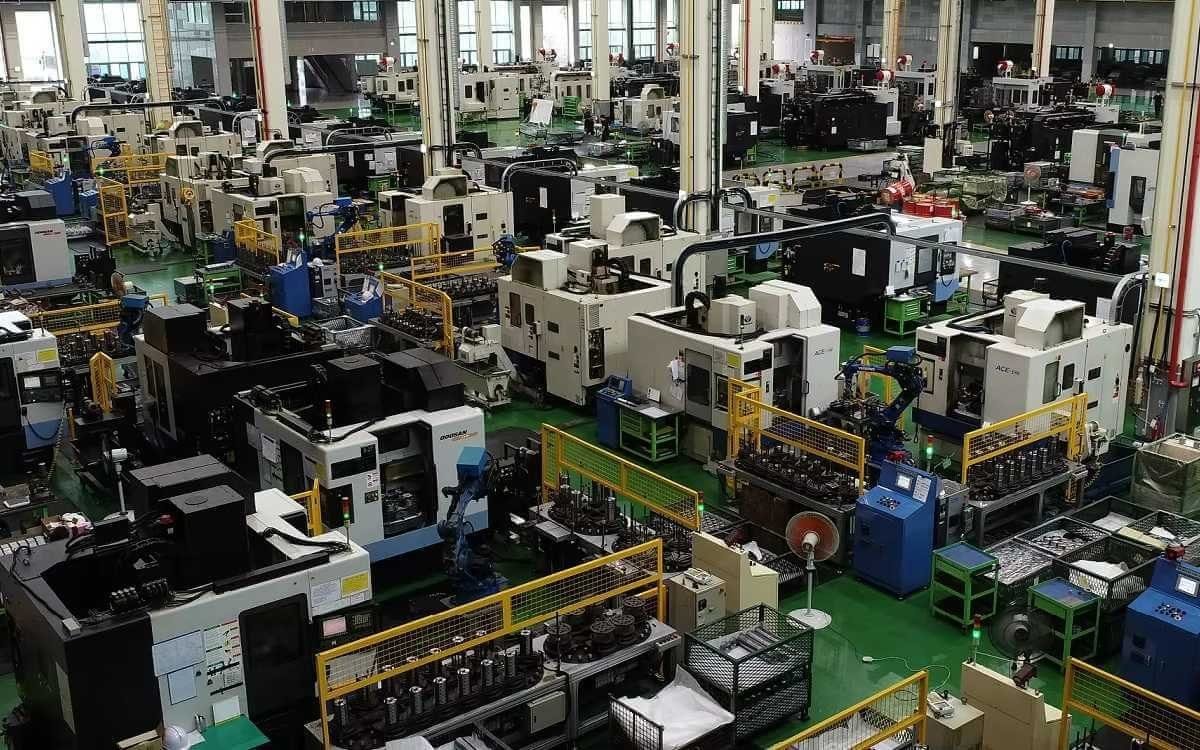
Yes, we are a manufacturer with our own factory.
Common models are in stock, and orders are usually shipped within 1–3 days.
5.Which payment methods are accepted?
We accept T/T, L/C, PayPal, VISA, Western Union, Apple Pay, Google Pay, Afterpay (Clearpay), Klarna, and Trade Assurance.
For full orders: 30% deposit, balance before shipment.
For small/sample orders: full payment in advance.
6.How will you deliver my goods?
We offer flexible shipping options: DHL, UPS, FedEx, TNT, EMS, as well as air or sea freight.
All deliveries ensure door-to-door fast and safe service.
7.How do you inspect and guarantee your products?
All products are tested before shipment to ensure perfect working condition.
We offer a 12-month warranty — if a product fails due to quality issues, we provide free spare parts or repair support.
8.What about after-sales service?
If you encounter any problem during use, please contact your sales manager or our support team at any time.
We will respond quickly and help solve the issue efficiently.
9.What are your main applications?
- Hydraulic systems
- Agricultural machinery
- Construction machinery
- Automobile industry
- Local distributors and maintenance centers
10.Can I get a discount for bulk orders?
Yes. We offer competitive wholesale prices and try our best to give benefits to long-term partners.
Shoot Us An Email
Professional Manufacturer