

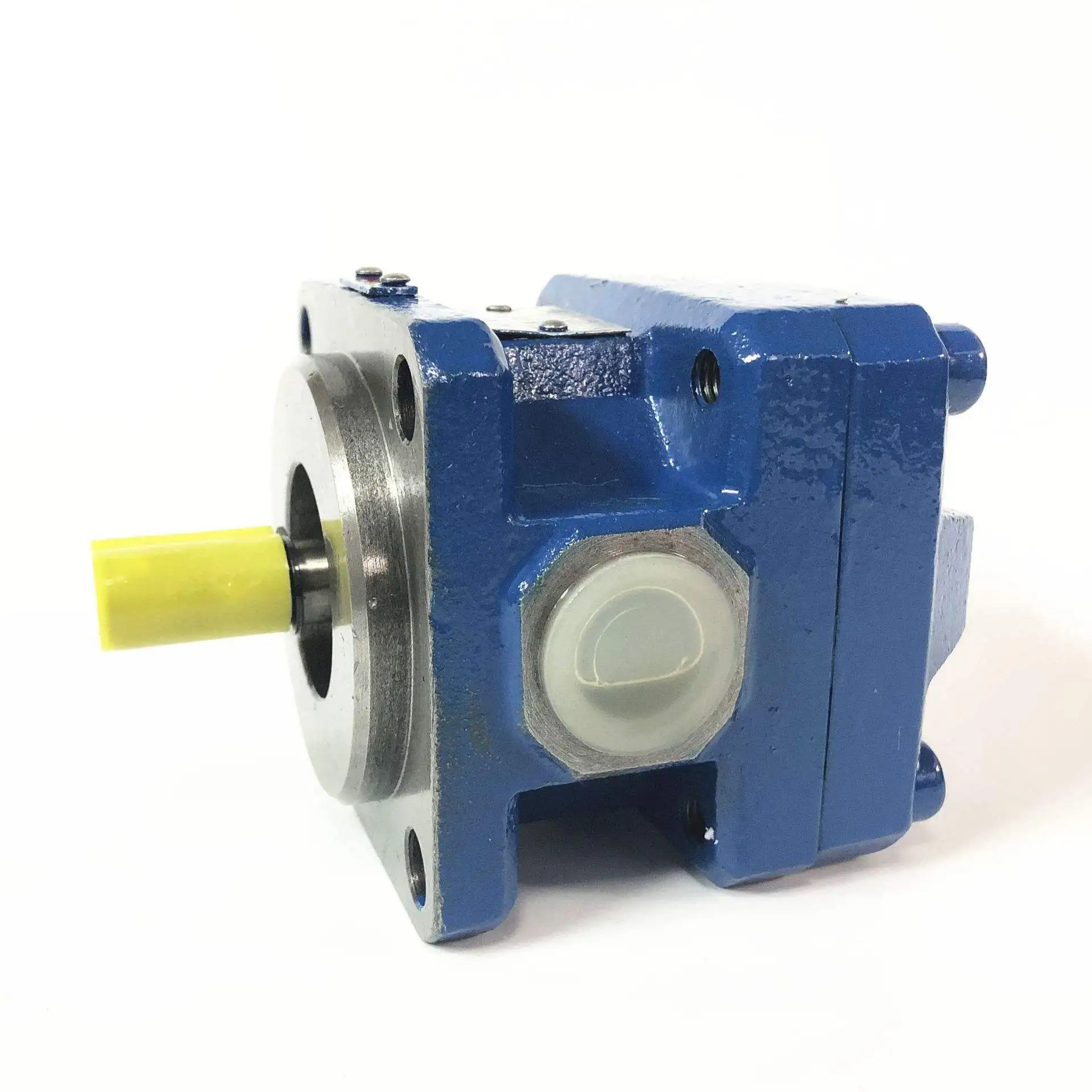
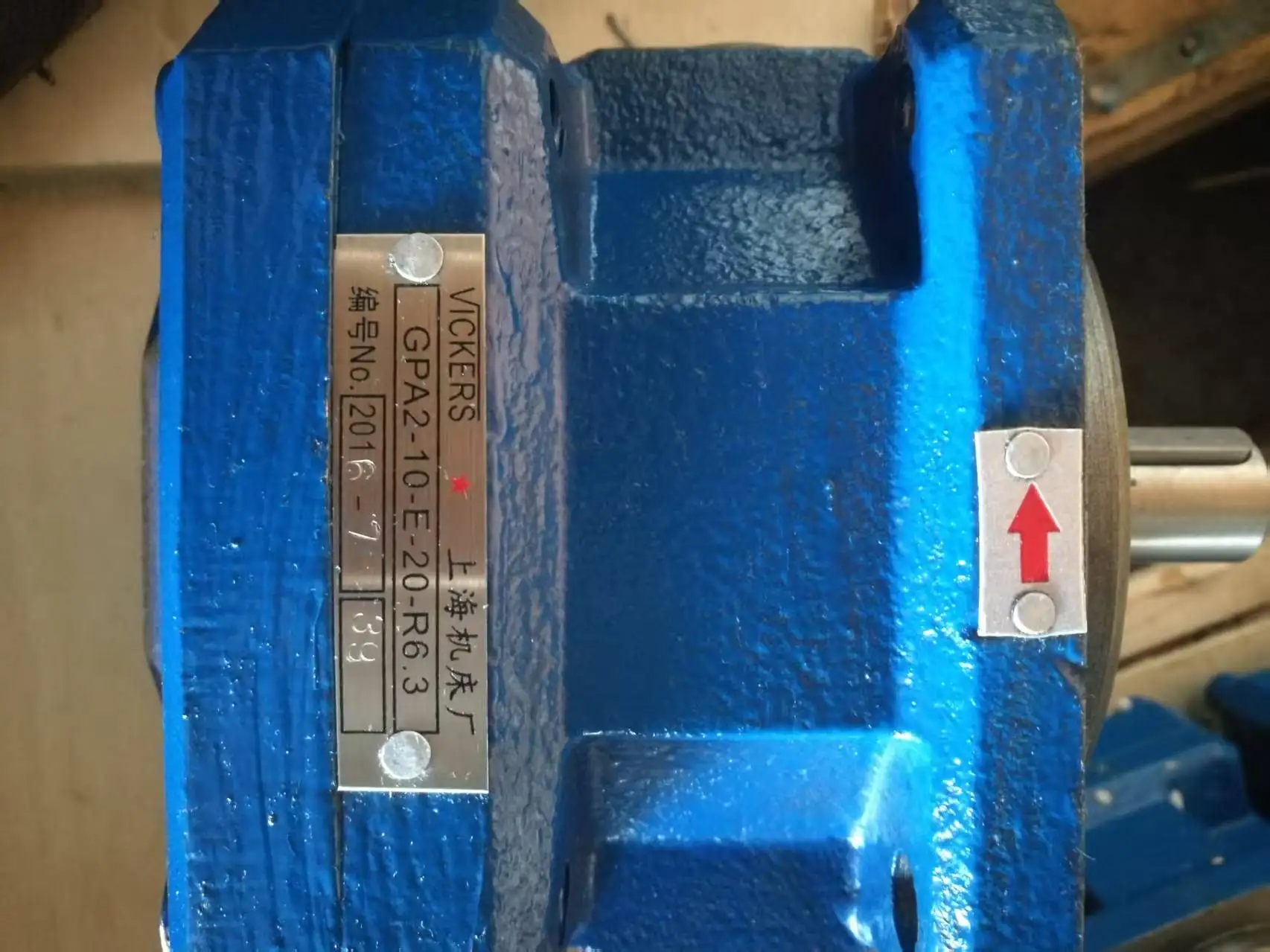
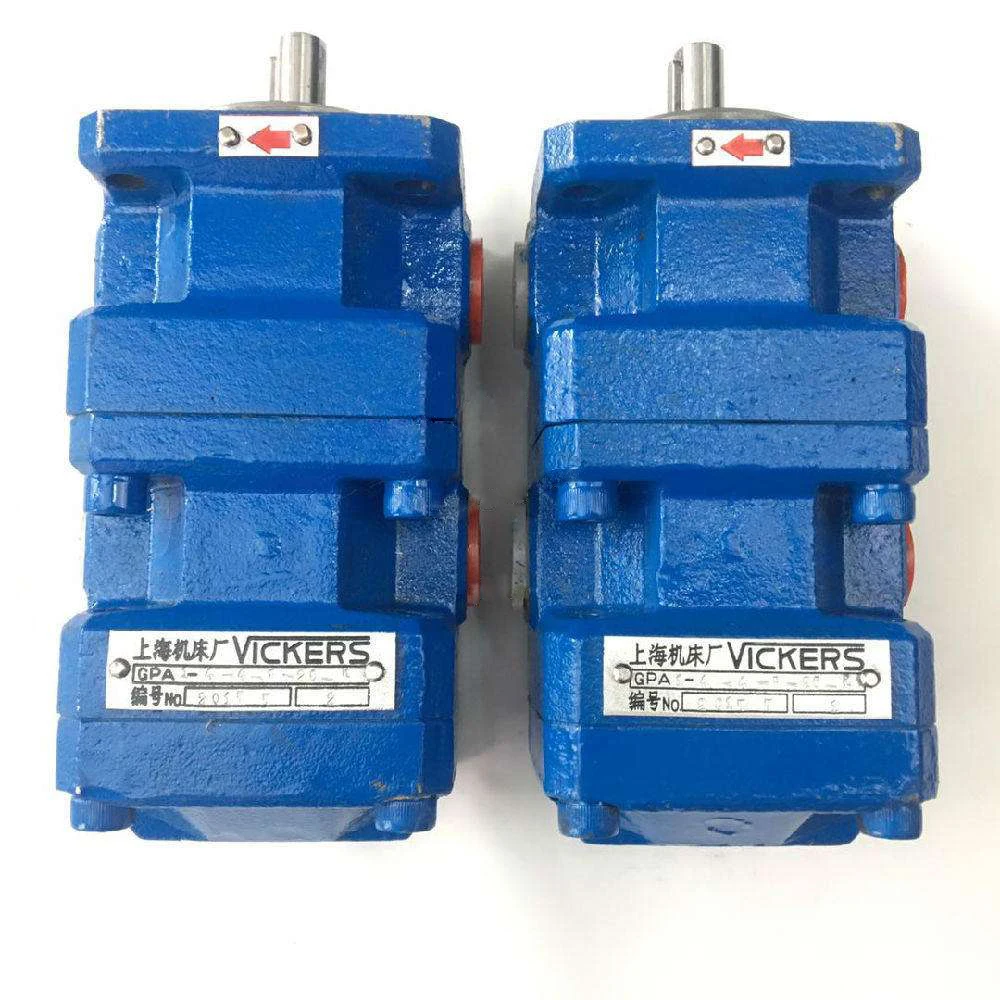
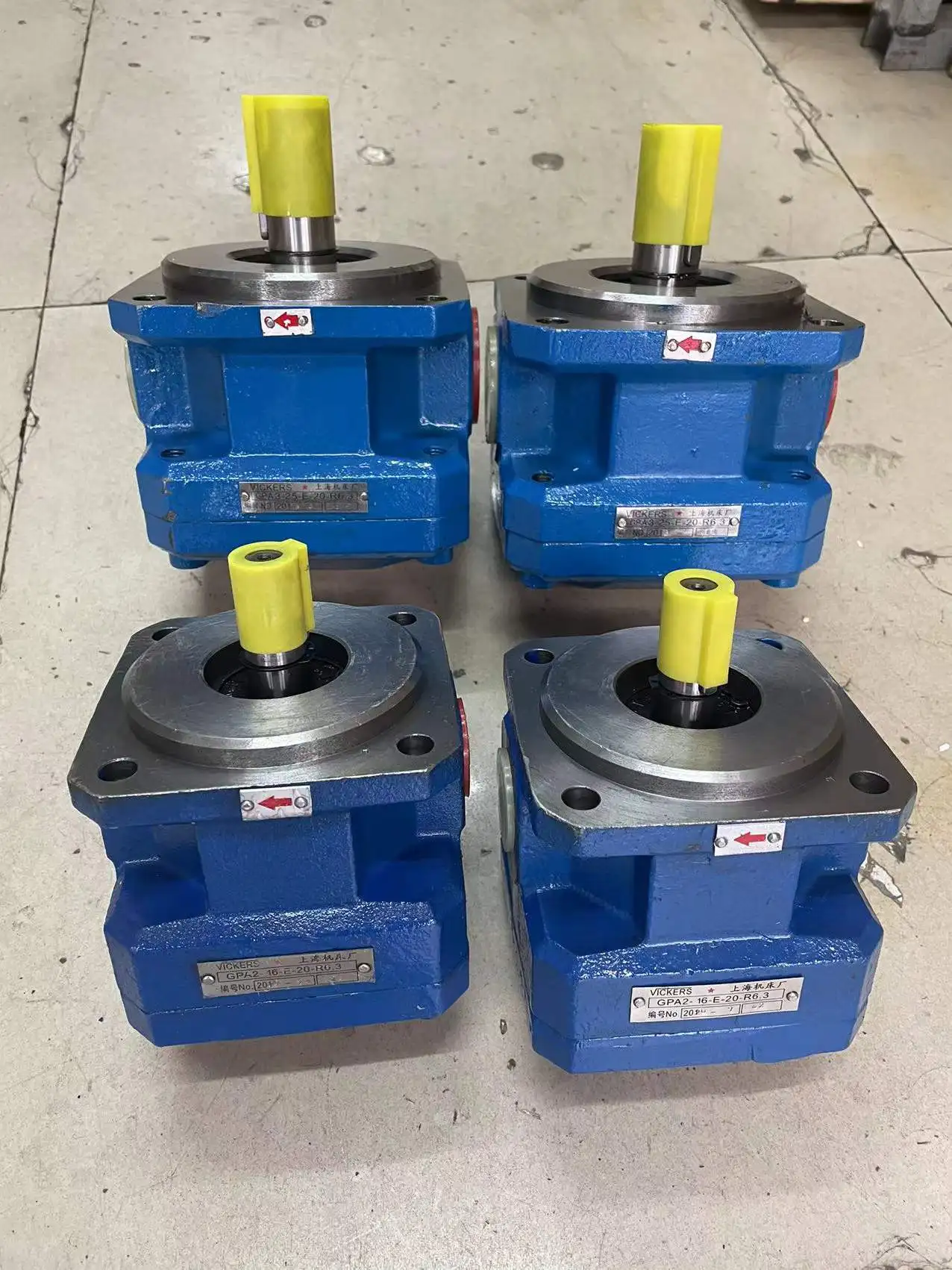
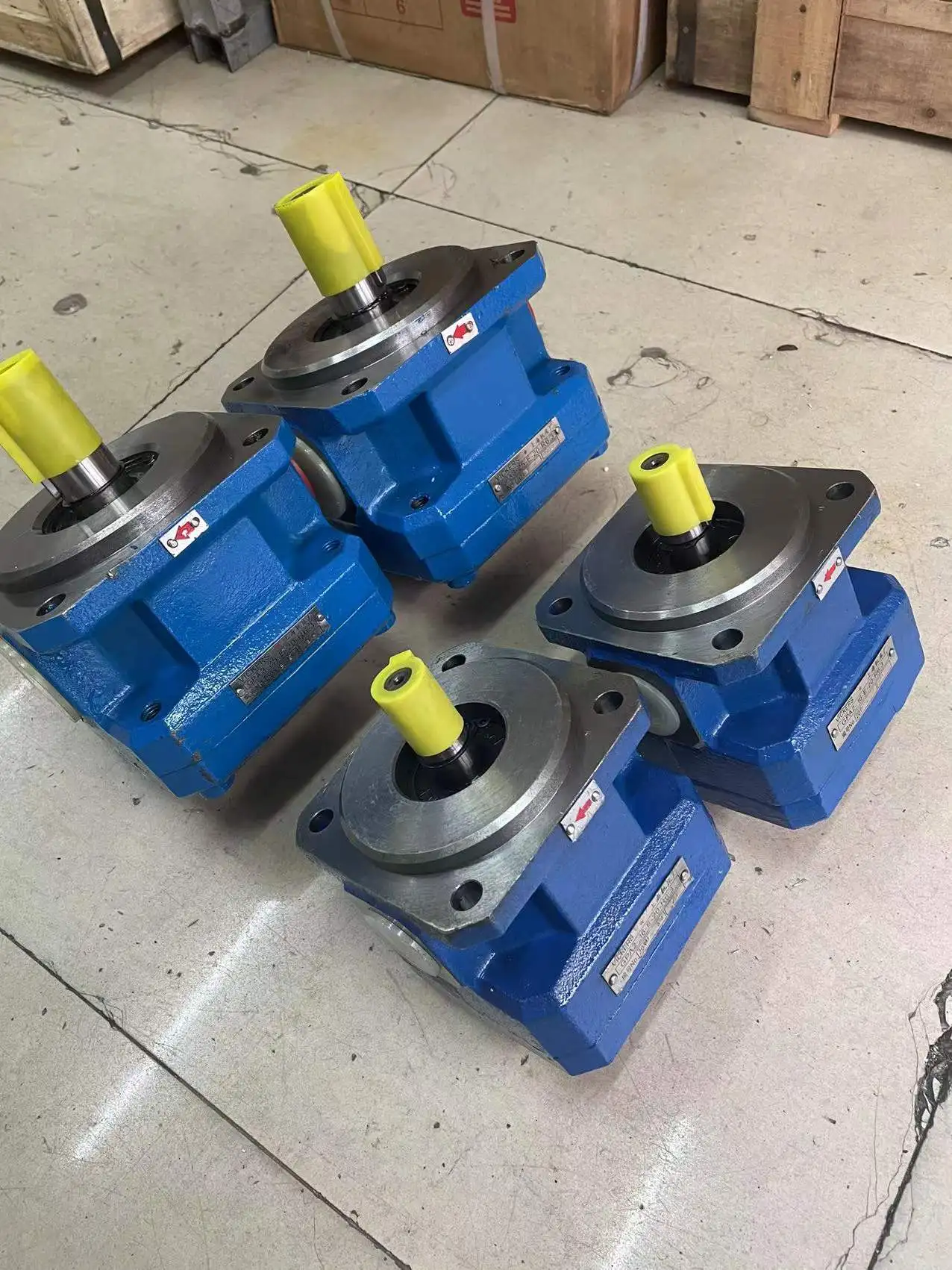
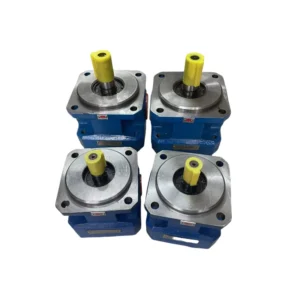
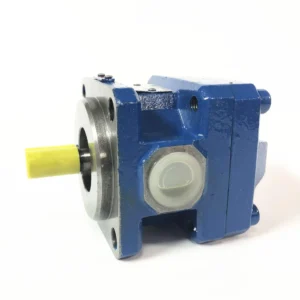

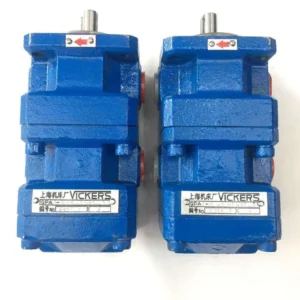
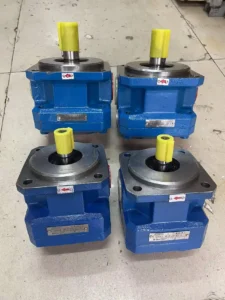
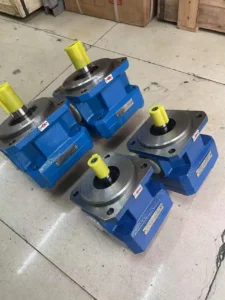
GPA2-6-6-EK1-20R6.3 | Vickers Internal Gear Pump 10.3cc 100bar
| Model Number | GPA2-6-6-EK1-20R6.3, GPA2-10-10-EK1-20R6.3 |
|---|
SKU
N/A
Categories Gear Pump, Hydraulic Pump
Tags 12v gear pump, air pump, gas pump, gear oil pump, gear pumps, hydraulic gear pump, internal gear pump, jet pump, ksb pump, micro gear pump, mini gear pump, mud pump, oil pump, rotary gear pump
Product Description
Product Overview
The GPA Series Internal Gear Pumps are fixed-displacement internal gear pumps manufactured under license from Vickers (USA) technology. The series includes single pumps and tandem (dual) pumps, with single pump displacements ranging from 1.76 to 63.6 mL/r across nine specifications, combinable into various tandem pump configurations.
The GPA series operates on the internal gear principle, where the internal and external gears are in contact on one side and separated by a crescent-shaped separator on the other side. The driving internal gear on the main shaft rotates the external gear in the same direction. This design delivers outstanding features including simple construction, smooth operation, low pressure pulsation, low noise, high reliability, and easy maintenance.
Key models in this series include:
GPA1 series single pumps: GPA1-1, GPA1-2, GPA1-4
GPA2 series single pumps: GPA2-6, GPA2-10, GPA2-16
GPA3 series single pumps: GPA3-25, GPA3-40, GPA3-63
GPA2 series tandem pumps: GPA2-6-6, GPA2-10-10, and more
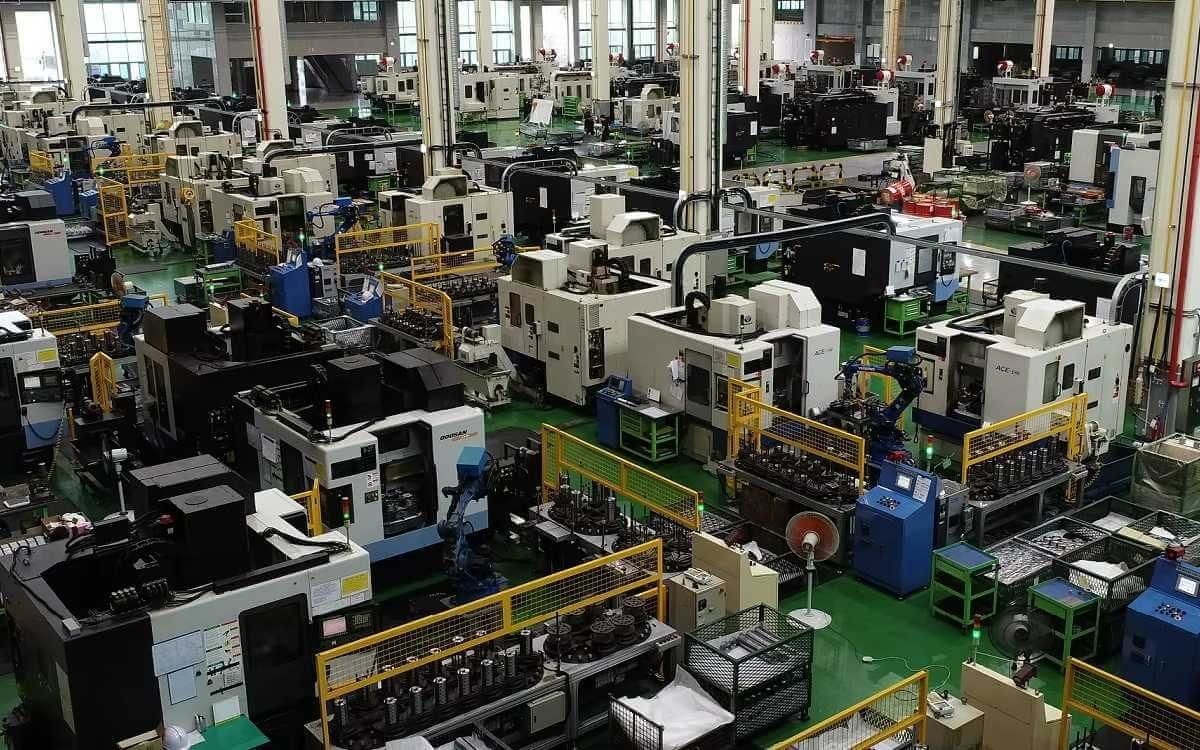
We specialize in the R&D and manufacturing of high-pressure pumps, motors, and valve groups. All GPA series models offer 100% direct interchangeability with original Vickers/Eaton pumps of the same model—no modification required. Every unit undergoes 100% simulated load testing before shipment, ensuring performance validation under real-world operating conditions.
Technical Specifications
GPA1 Series (Single Pumps):
GPA1-1-EK1-20R6.3: Displacement 2.6 cm³/rev
GPA1-2-EK1-20R6.3: Displacement 4.2 cm³/rev
GPA1-4-EK1-20R6.3: Displacement 6.8 cm³/rev
GPA2 Series (Single Pumps):
GPA2-6-EK1-20R6.3: Displacement 10.3 cm³/rev
GPA2-10-EK1-20R6.3: Displacement 16.6 cm³/rev
GPA2-16-EK1-20R6.3: Displacement 26.2 cm³/rev
GPA3 Series (Single Pumps):
GPA3-25-EK1-20R6.3: Displacement 38.0 cm³/rev
GPA3-40-EK1-20R6.3: Displacement 61.0 cm³/rev
GPA3-63-EK1-20R6.3: Displacement 96.0 cm³/rev
GPA2 Series (Tandem Pumps):
GPA2-6-6-EK1-20R6.3: Dual displacement 10.3 + 10.3 cm³/rev
GPA2-10-10-EK1-20R6.3: Dual displacement 16.6 + 16.6 cm³/rev
General Specifications:
Technology Source: Vickers (USA) / Eaton
Pump Type: Internal gear pump
Rated Pressure: 10 MPa (100 bar), optional 6.3 MPa or 10 MPa
Maximum Speed: 2000 – 3000 r/min
Minimum Speed: 600 r/min
Seal Material: NBR (Nitrile Butadiene Rubber)
Configuration: Single pump / Tandem pump
Fluid Media: Mineral hydraulic oil (ISO VG 32/46/68)
Recommended Viscosity: 40 cSt at 38°C
Test Speed: 1500 r/min
Note: Flow and power data above are typical values at 1500 r/min with 40 cSt oil at 38°C.
Key Technical Advantages
1. Ultra-Low Noise Operation via Internal Gear Principle
The GPA series utilizes the internal gear principle with internal and external gears rotating in the same direction, separated by a unique crescent-shaped separator. Compared to conventional external gear pumps, this internal gear design significantly reduces fluid pulsation and pressure fluctuations, delivering exceptionally low noise levels—ideal for noise-sensitive applications such as machine tools, medical equipment, and food processing machinery.
2. Minimal Pressure Pulsation for Smooth System Operation
Advanced radial and axial pressure compensation design ensures minimal pressure pulsation across the entire operating pressure range. This characteristic significantly enhances hydraulic system control precision and stability, making the GPA series particularly suitable for precision equipment such as injection molding machines and die-casting machines where pressure and flow stability are critical.
3. Low Contamination Sensitivity with Wide Adaptability
The internal gear pump design offers relatively low sensitivity to hydraulic oil cleanliness compared to piston pumps. The GPA series accommodates a wide speed range (600–3000 r/min) and can be paired with asynchronous or synchronous motors, including variable frequency drive control.
4. Modular Design for Flexible Configuration
With nine displacement options ranging from 1.76 to 63.6 mL/r, single pumps can be freely combined into various tandem pump configurations. Models such as GPA2-6-6 and GPA2-10-10 exemplify this flexibility, supplying two independent hydraulic circuits simultaneously while simplifying system layout.
5. Simple Construction with Easy Maintenance
The GPA series consists of a minimal number of components—gears, bearings, housing, end covers, and the crescent separator—resulting in simple construction and high reliability. Maintenance requires no complex disassembly, significantly reducing equipment downtime.
Application Areas
Machine tools (machining centers, lathes, milling machines) hydraulic systems
Injection molding machines (clamping, ejection, injection) hydraulic systems
Die-casting machines (injection and clamping) hydraulic systems
Hoisting machinery (lifting and luffing) hydraulic systems
Baling machinery (compression and strapping) hydraulic systems
Wood-based panel processing (hot press) hydraulic systems
Food processing machinery with noise and cleanliness requirements
Expert Maintenance Tips
Model Code Interpretation (verify each element):
GPA series model codes contain critical information. Before selection and installation, confirm the following parts:
GPA: Series code.
First digit (1/2/3): Group number indicating pump size.
Middle number(s) (e.g., 6, 10, 16 or 6-6, 10-10): Displacement in mL/r for a single pump; for tandem pumps, the two displacements are joined by a hyphen.
EK1: Seal and configuration code (standard NBR seal with specific mounting arrangement).
20R: Rotation direction and shaft code – “20” denotes shaft specification, “R” indicates right-hand (clockwise) rotation.
Final number (6.3 or 10): Rated pressure in MPa (e.g., 6.3 = 6.3 MPa, 10 = 10 MPa).
Verify Rotation Direction:
Confirm that drive shaft rotation matches the direction code in the model (e.g., “R” for right-hand, “L” for left-hand). Incorrect rotation will prevent pressure build-up and may damage internal gears and the crescent separator.
Suction Line and Oil Cleanliness Management:
Although the GPA series has relatively low contamination sensitivity, hydraulic oil with cleanliness not lower than ISO 4406 18/16/13 is recommended. Ensure the suction line is properly sealed to prevent air ingress and cavitation. Recommended suction vacuum does not exceed 0.3 bar (absolute pressure).
First-Start Priming Procedure:
After new pump installation or system overhaul, perform priming before first start. Jog the pump at low pressure (not exceeding 2.5 MPa) and low speed (approx. 600 r/min) for 2–3 minutes until the pump body is fully filled with oil and air is purged, then gradually increase to rated speed and working pressure. Running the pump dry will cause irreversible damage to gears and bearings.
Oil Temperature and Viscosity Monitoring:
GPA series performance data is based on 40 cSt oil at 38°C. Maintain oil temperature within 30–60°C range. Excessive viscosity increases suction resistance, while low viscosity accelerates internal leakage and reduces volumetric efficiency. Regularly inspect oil condition and replace if emulsified or degraded.
Regular Inspection and Maintenance:
Replace hydraulic oil and return filters every 1,000 operating hours or per equipment manufacturer recommendations. Regularly monitor pump body temperature and operating noise—any abnormal temperature rise or increased noise should trigger immediate system troubleshooting.


Company Profile

Frequently Asked Questions
1.What ls our Main Products?
1.Hydraulic pump
2.Hydraulic valve
3.Hydraulic motor
4.Hydraulic cylinder
5.Hydraulic parts
2. What about the MOQ?
3.What are your advantages?
- Adhere to quality first.
- Support customization, ODM & OEM service.
- 1-year warranty and complete after-sales support.
- Safe and fast shipping worldwide.
- 24-hour online service for your inquiries.
4.Are you a manufacturer? What’s your delivery time?
Yes, we are a manufacturer with our own factory.
Common models are in stock, and orders are usually shipped within 1–3 days.
5.Which payment methods are accepted?
We accept T/T, L/C, PayPal, VISA, Western Union, Apple Pay, Google Pay, Afterpay (Clearpay), Klarna, and Trade Assurance.
For full orders: 30% deposit, balance before shipment.
For small/sample orders: full payment in advance.
6.How will you deliver my goods?
We offer flexible shipping options: DHL, UPS, FedEx, TNT, EMS, as well as air or sea freight.
All deliveries ensure door-to-door fast and safe service.
7.How do you inspect and guarantee your products?
All products are tested before shipment to ensure perfect working condition.
We offer a 12-month warranty — if a product fails due to quality issues, we provide free spare parts or repair support.
8.What about after-sales service?
If you encounter any problem during use, please contact your sales manager or our support team at any time.
We will respond quickly and help solve the issue efficiently.
9.What are your main applications?
- Hydraulic systems
- Agricultural machinery
- Construction machinery
- Automobile industry
- Local distributors and maintenance centers
10.Can I get a discount for bulk orders?
Yes. We offer competitive wholesale prices and try our best to give benefits to long-term partners.
Shoot Us An Email
Professional Manufacturer