
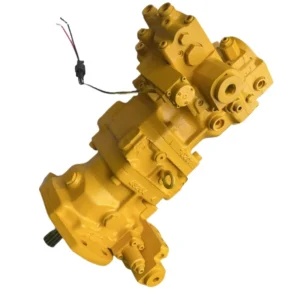
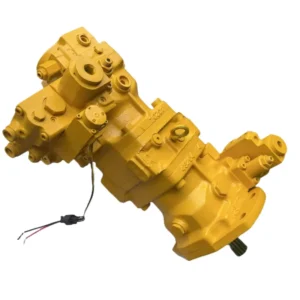
Product Overview
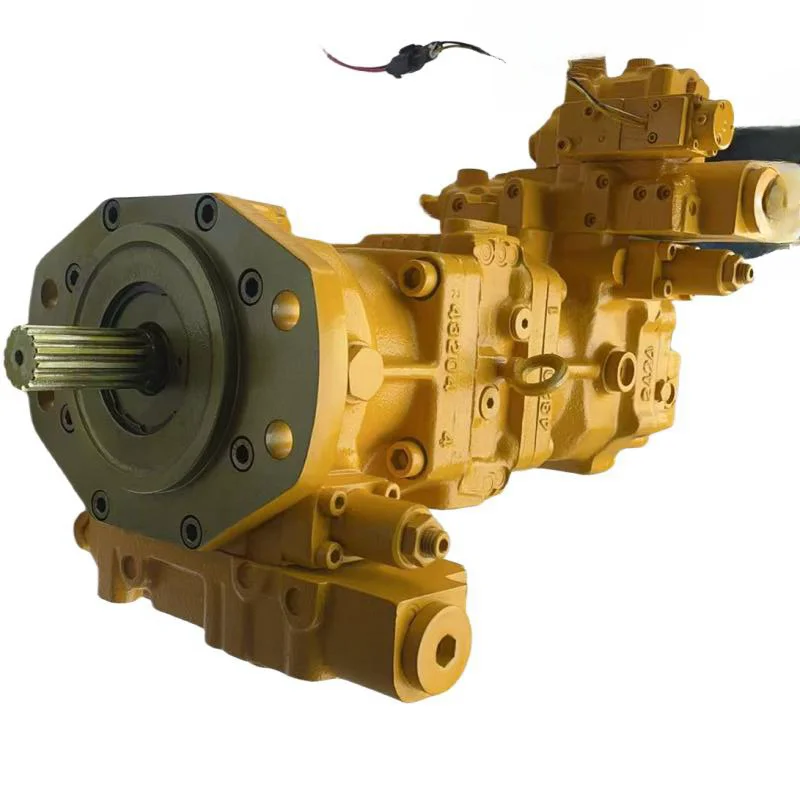
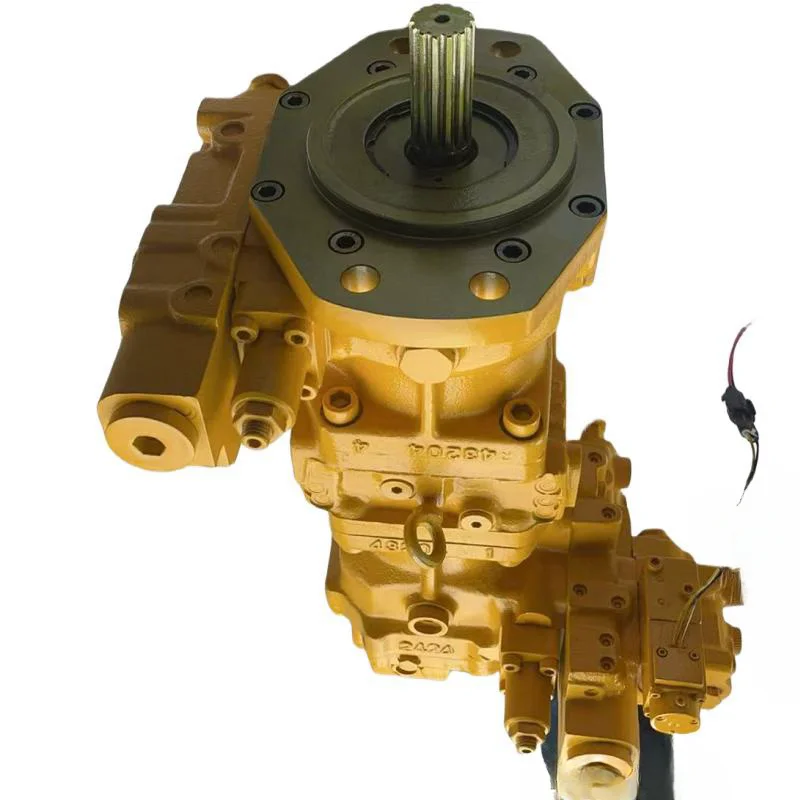
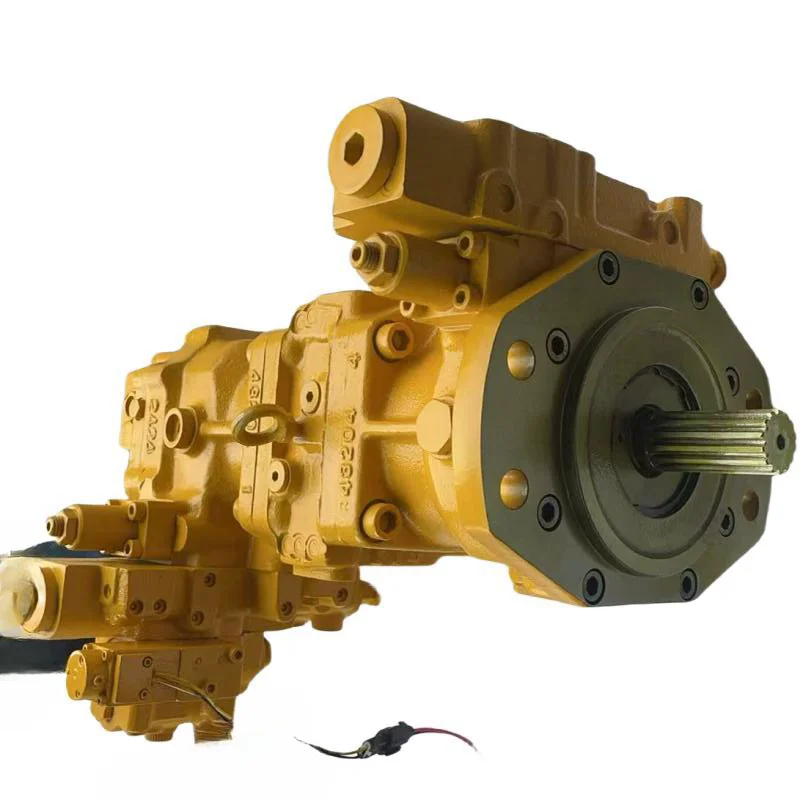
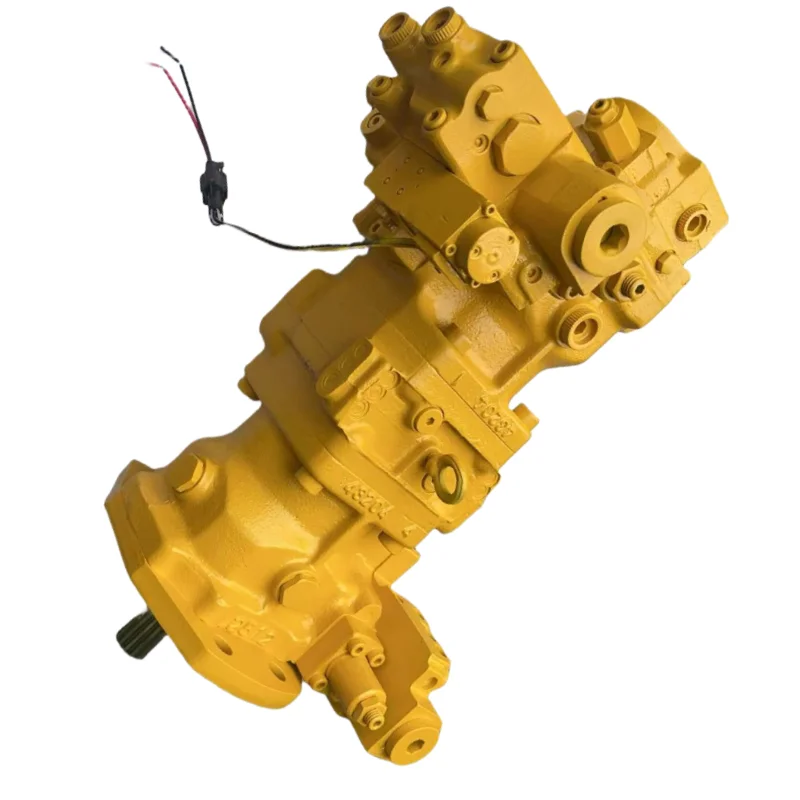
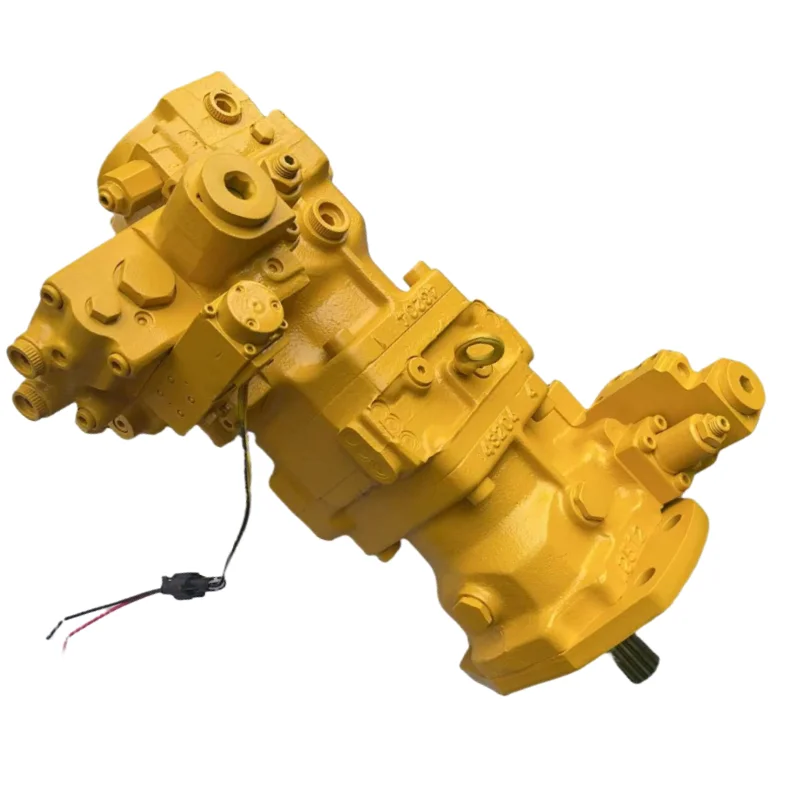
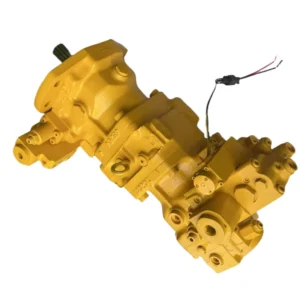
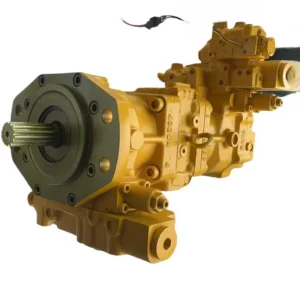
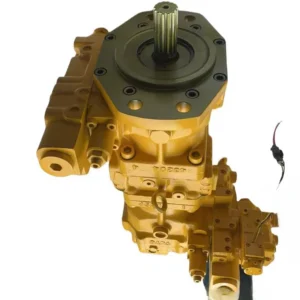
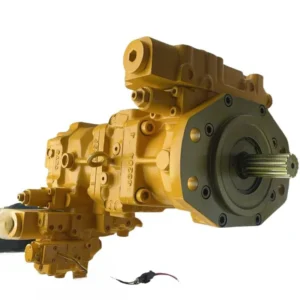
The PSV2-55T-2 is a KAYABA / KYB tandem variable-displacement axial piston pump designed for heavy-duty hydraulic systems used in construction machinery and excavators.
KYB’s official hydraulic documentation classifies the PSV family as variable-displacement swash-plate piston pumps for heavy-duty applications. In the KYB model structure, the number “2” identifies a tandem dual-pump configuration.
A tandem arrangement integrates two pump sections into a common mechanical drive system and allows separate hydraulic flow paths. KYB documentation notes that the flow rates of the first and second pumps can be set independently.
Public KAYABA application references associate the PSV2-55T family with excavator applications including Sumitomo SH-series and JCB JS-series machines.
For replacement applications, the PSV2-55T-2 should not be selected solely from the basic series designation. The complete pump identification, shaft configuration, port arrangement, rotation and regulator configuration should be verified against the original unit.
Our replacement engineering approach focuses on in-place interchangeability and 100% simulated working-condition testing, providing a practical solution for hydraulic pump replacement, repair and remanufacturing programs.
Technical Specifications
Confirmed Engineering Information
- Model: PSV2-55T-2
- Brand: KAYABA / KYB
- Pump Series: PSV2
- Pump Type: Variable-displacement swash-plate piston pump
- Configuration: Tandem / dual pump
- Typical Application: Excavators and construction machinery
- Pump Architecture: Axial piston / swash-plate design
- PSV2 Model Meaning: “2” identifies a tandem dual-pump configuration.
- Application References: Sumitomo SH-series and JCB JS-series equipment.
Exact-Model Data Not Verified in Public OEM Documentation
The current public KYB documentation reviewed does not provide a specification line that directly assigns the following values to the complete PSV2-55T-2 configuration.
Therefore, these figures should not be inferred from another PSV2 model:
- Displacement: Exact PSV2-55T-2 value not verified
- Rated Pressure: Not verified for this exact configuration
- Peak Pressure: Not verified for this exact configuration
- Maximum Speed: Not verified for this exact configuration
- Control Method: Exact configuration not verified
- Rotation: Verify from original pump identification
- Weight: Exact configuration not verified
For comparison, KYB’s official catalog explicitly specifies the smaller PSV2-10 and PSV2-16 models as 10.0 × 2 and 16.4 × 2 cm³/rev, with 27.5 MPa maximum working pressure and 3,200 rpm maximum speed. These values belong to those specific models and must not be transferred to PSV2-55T-2.
Key Technical Advantages
Tandem Dual-Pump Architecture
The tandem configuration integrates two hydraulic pump sections into a single driven assembly.
This allows separate flow delivery to different hydraulic circuits and supports simultaneous machine functions. KYB specifically notes that the first and second pump flow rates can be independently configured.
Variable-Displacement Swash-Plate Technology
The PSV family uses a variable-displacement swash-plate piston design.
Changing the swash-plate angle changes piston stroke and therefore the theoretical displacement per revolution. This provides the hydraulic system with adaptable flow output according to operating demand.
Precision Rotary Group
PSV2-55T service references identify key components such as:
- Cylinder block
- Piston shoes
- Valve plates
- Retainer plates
- Ball guides
- Drive shaft
- Swash plate
- Saddle bearings
- Bearing seats
These components form the primary rotary group and support structure of the pump.
For a replacement or remanufactured pump, dimensional control of these components is critical to volumetric efficiency, internal leakage, thermal behavior and service life.
Heavy-Duty Construction Equipment Application
KYB describes its piston-pump products as high-pressure, variable-displacement units mainly used in construction equipment and other heavy-load applications.
For the PSV2-55T-2, engineering verification should therefore cover:
- Flow matching
- Pressure response
- Regulator response
- Internal leakage
- Oil temperature
- Noise and vibration
- Continuous-load stability
In-Place Interchangeability
Our replacement strategy focuses on matching the original pump’s:
- Mechanical mounting
- Drive shaft interface
- Hydraulic ports
- Rotation
- Regulator configuration
This supports practical in-place interchangeability and minimizes unnecessary machine modifications.
100% Simulated Working-Condition Testing
Each replacement unit can undergo simulated operating-condition testing covering:
- No-load startup
- Flow response
- Pressure build-up
- Regulator response
- Leakage inspection
- Noise and vibration checks
- Continuous-load operation
The objective is to reduce commissioning risk and improve field reliability after installation.
Application Areas
The PSV2-55T family is commonly associated with excavator and construction-equipment hydraulic applications, including:
- Sumitomo SH-series excavators
- Sumitomo SH100 / SH120 applications
- JCB JS-series excavators
- Crawler excavators
- Main hydraulic pump systems
- Heavy construction machinery
Public references associate PSV2-55T with Sumitomo SH-series applications, but final compatibility should always be verified against the machine serial number and complete original pump identification.
Expert Maintenance Tips
Verify the Complete Pump Identification
Before purchasing or installing a PSV2-55T-2 replacement, verify:
- Complete model code
- Nameplate information
- Part number
- Machine model
- Machine serial number
- Shaft configuration
- Rotation direction
- Port arrangement
- Regulator configuration
Clean the Hydraulic Circuit
A failed piston pump can release metallic contamination into the complete hydraulic circuit.
Before installing the replacement unit, inspect:
- Hydraulic reservoir
- Suction circuit
- Return filtration
- Hydraulic hoses
- Pipework
- Oil condition
Residual contamination can damage the replacement cylinder block, valve plate and piston group.
Prevent Suction-Side Air Ingress
Before startup, make sure the suction circuit is properly sealed and supplied with clean hydraulic oil.
Check:
- Oil level
- Suction hose
- Hose connections
- Air leakage
- Pump priming condition
Insufficient inlet conditions can lead to cavitation, abnormal noise and accelerated component wear.
Use Controlled Commissioning
A recommended commissioning sequence is:
Low-load startup → leakage inspection → noise check → pressure verification → actuator testing → gradual load increase.
Avoid immediately applying prolonged full load after pump replacement.
Diagnose Abnormal Noise Systematically
When abnormal pump noise or unstable flow occurs, first investigate:
- Suction restriction
- Air ingress
- Oil level
- Oil viscosity
- Suction hose condition
- Tank aeration
Not every apparent pump failure is caused by the internal rotary group.