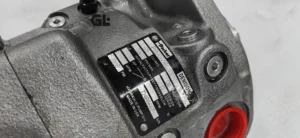
Product Overview
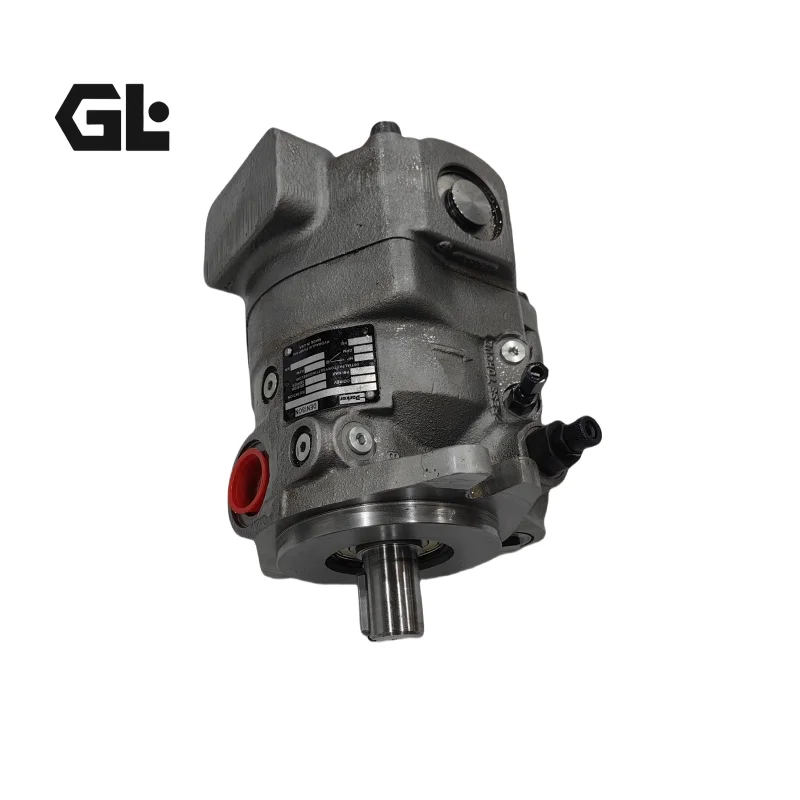
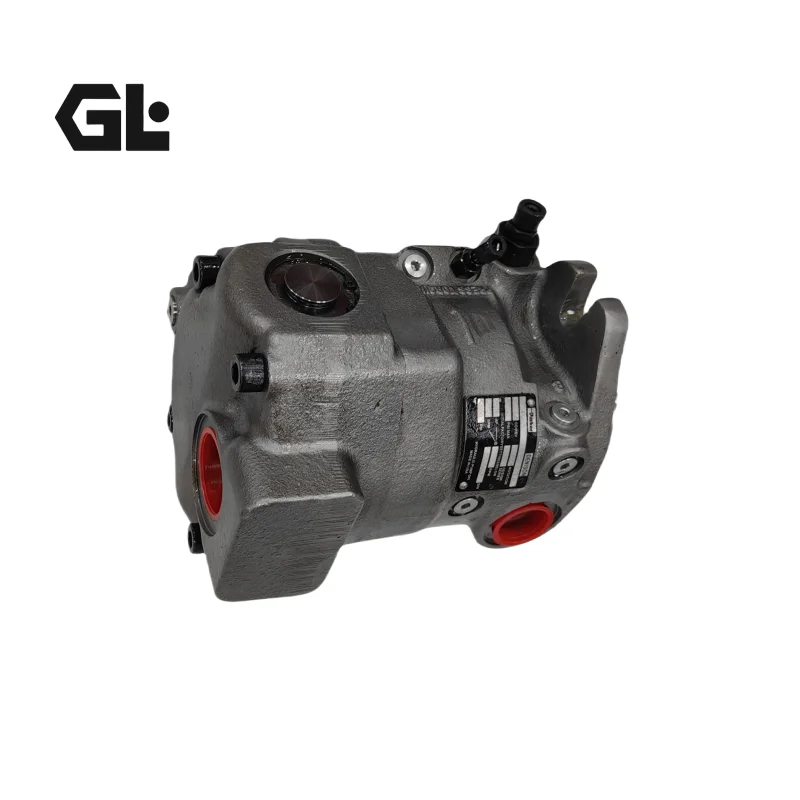
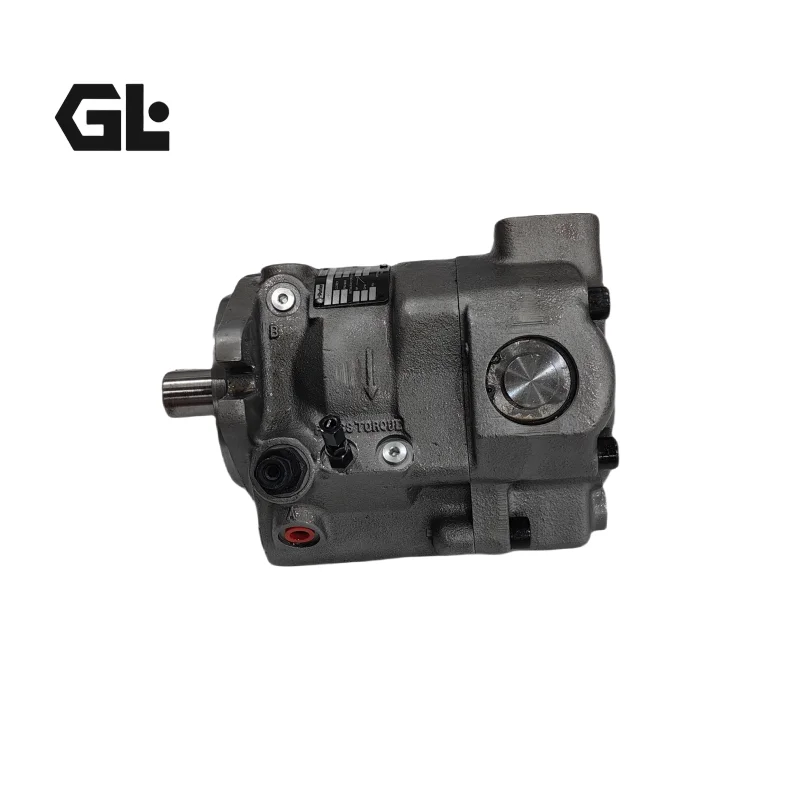
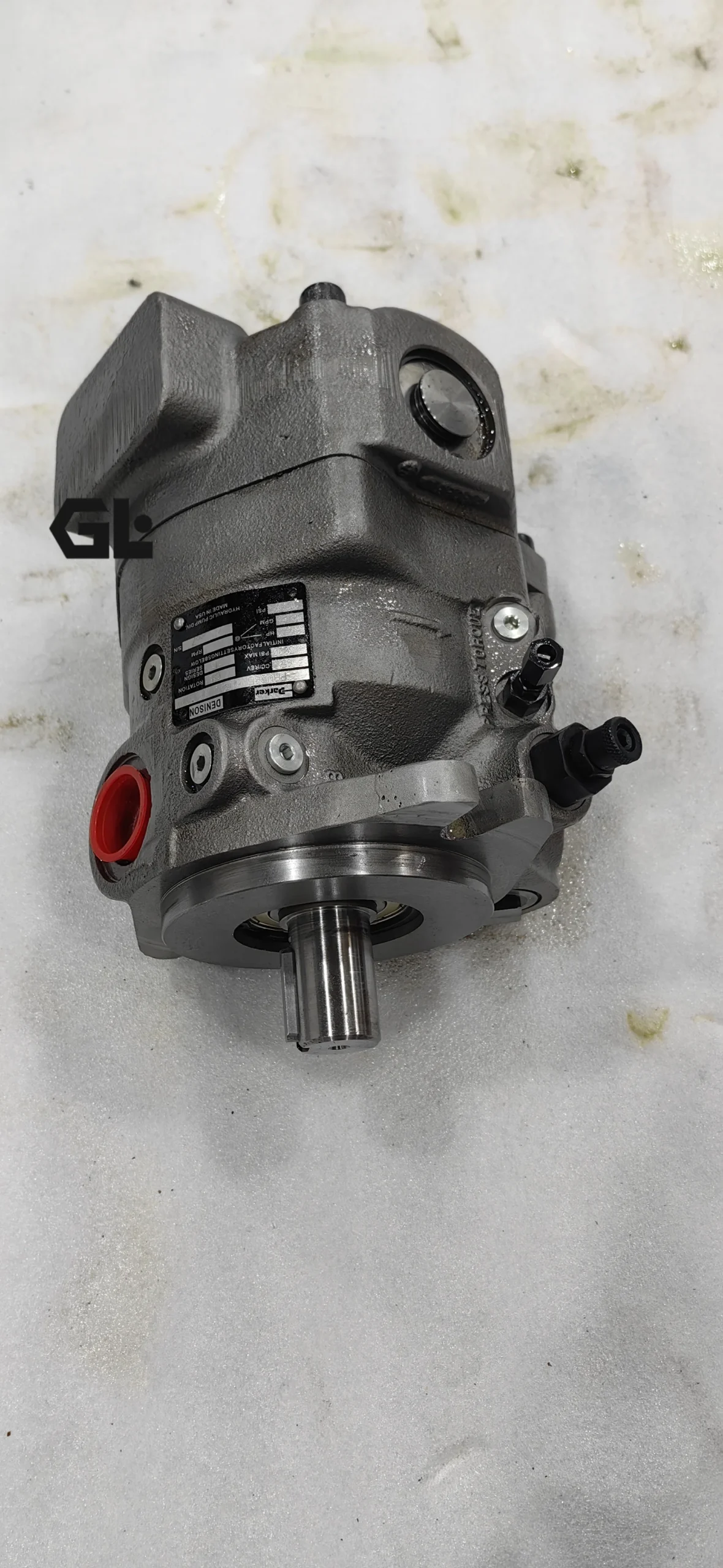
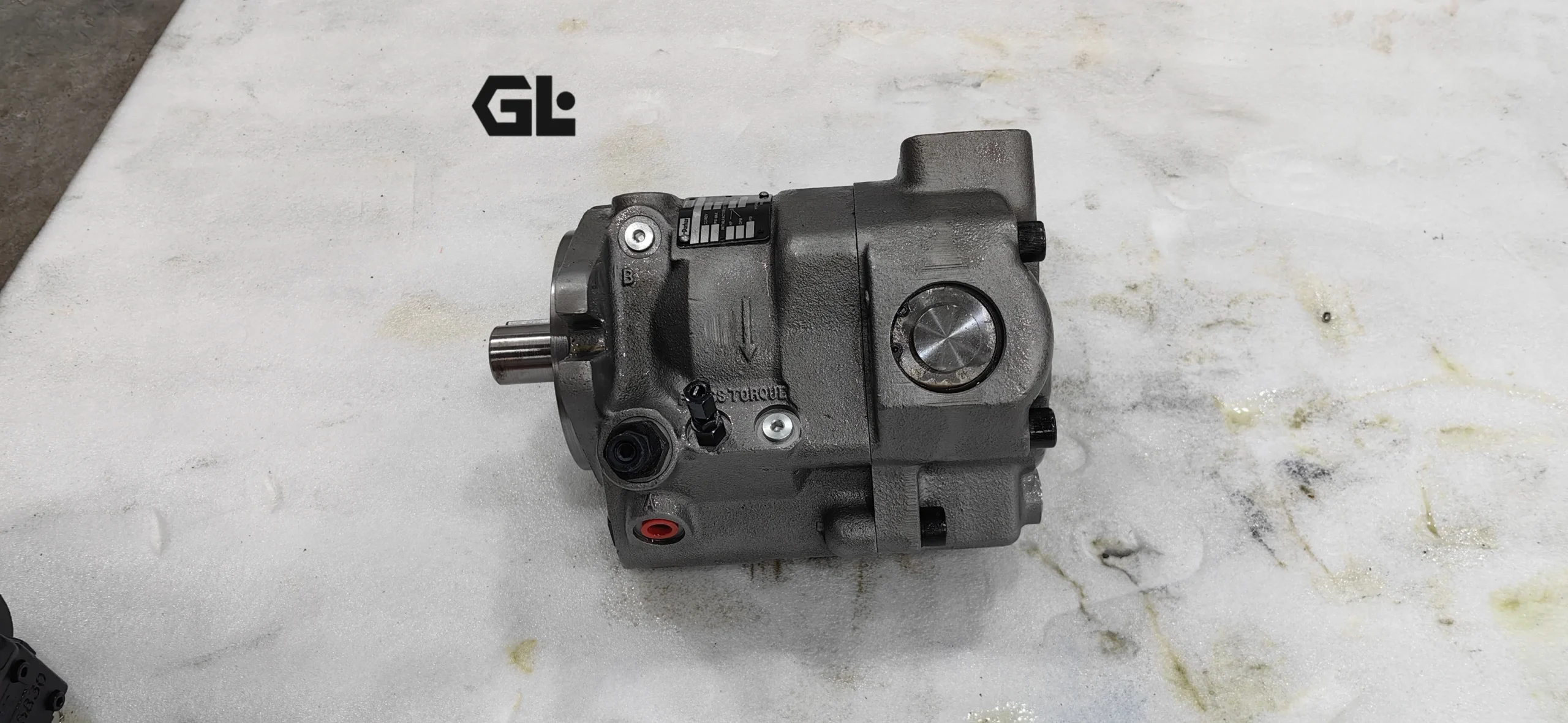
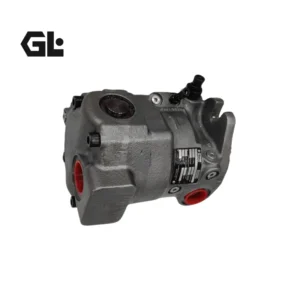
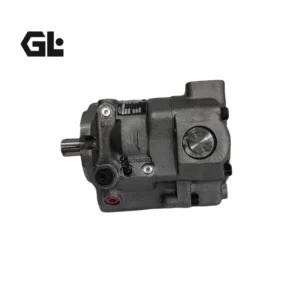
The Parker PAVC65R213 belongs to the Parker PAVC Series medium-pressure supercharged variable displacement piston pumps. Parker’s official technical documentation defines the PAVC65 at 65 cm³/rev (4.0 in³/rev), with a 600–3000 rpm speed rating, 207 bar / 3000 psi continuous outlet pressure, and 248 bar / 3600 psi peak pressure.
The PAVC platform uses a high-strength cast-iron housing, built-in supercharger, sealed shaft bearing, two-piece housing, field-changeable cartridge controls, replaceable bronze-clad port plate, standard airbleed and hydrodynamic cylinder-barrel bearing. Parker also specifies suitability for filtered and/or cooled drain lines up to 7 bar / 100 psi.
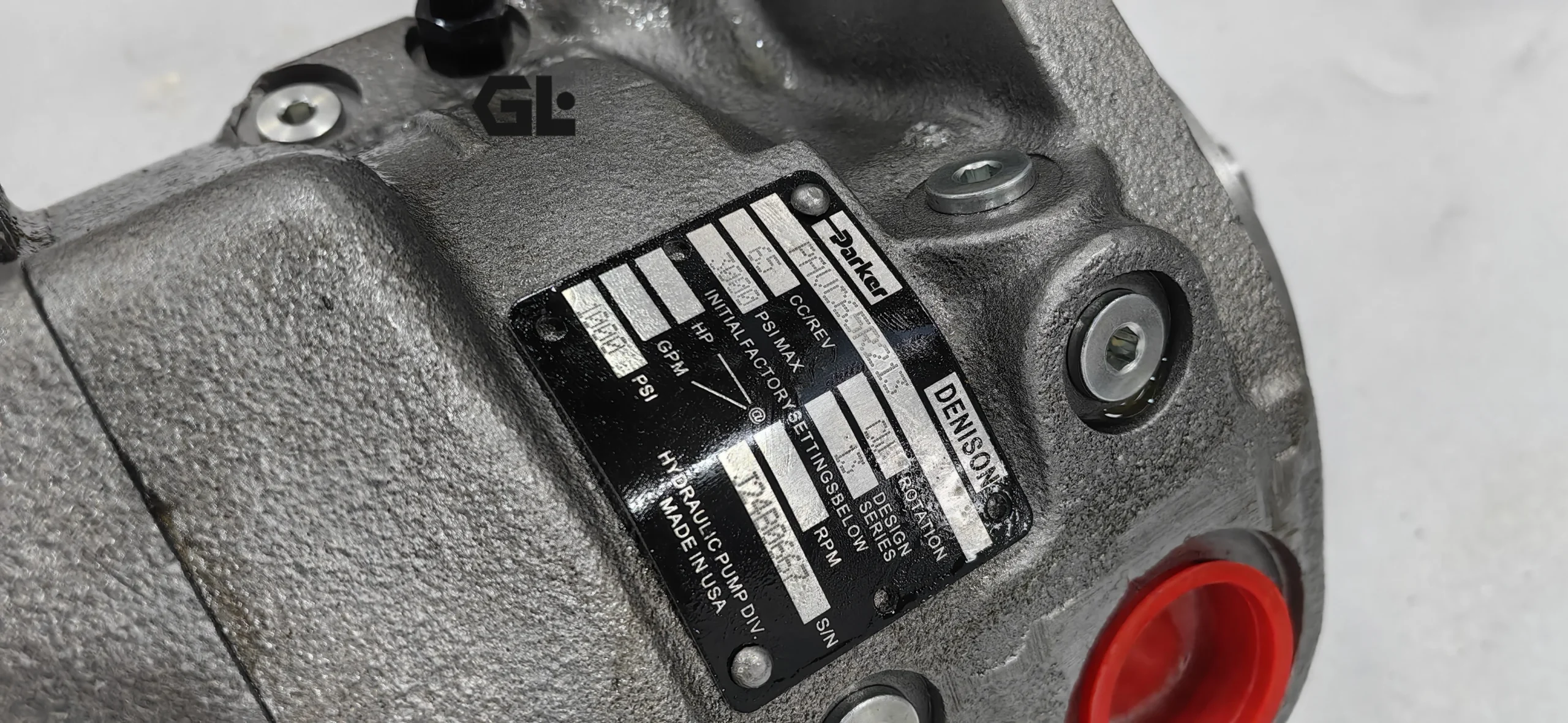
The exact PAVC65R213 designation should be treated as a legacy/short-form configuration identifier. Parker’s current public ordering-code system uses a more detailed sequence covering displacement, bearing, shaft, porting, rotation, volume stop, thru-shaft and control options. Parker’s historical service literature also shows the PAVC65 model format ending in 13. Because the public documentation does not fully decode the compressed R213 string as a current full ordering code, final replacement supply should be confirmed from the nameplate or full configuration record.
For aftermarket replacement, our engineering process verifies the complete configuration rather than displacement alone. Confirmed units can be supplied for in-place interchangeability and 100% simulated working-condition testing.
Technical Specifications
PAVC65R213
- Brand: Parker Hannifin
- Series: PAVC
- Product Type: Open-Circuit Variable Displacement Axial Piston Pump
- Model: PAVC65R213
- Displacement: 65 cm³/rev
- Displacement: 4.0 in³/rev
- Continuous Outlet Pressure: 207 bar / 3000 psi
- Peak Outlet Pressure: 248 bar / 3600 psi
- Speed Rating: 600–3000 rpm
- Maximum Speed: 3000 rpm, subject to inlet characteristics
- Control: Standard PAVC65 configuration is pressure compensated; the PAVC platform also supports load sensing, power/torque limiting, remote pressure compensation, pressure-and-flow control and other options.
- Standard Pressure-Compensator Range: 41–207 bar / 600–3000 psi.
- Reference Pump Delivery: 78.7 L/min at 1200 rpm and 118.1 L/min at 1800 rpm at Parker’s specified reference condition.
- Reference Input Power: 43.1 kW / 57.8 hp at 1800 rpm, maximum displacement and 207 bar.
- Operating Temperature: −40°C to +71°C.
- Maximum Inlet Pressure: 1.7 bar / 25 psi
- Minimum Inlet Pressure Reference: 0.17 bar absolute / 5 in.Hg vacuum at 1800 rpm; consult the inlet-characteristics curve for other speeds.
- Maximum Control Drain Pressure: 7 bar / 100 psi
- Housing Material: High-strength cast iron
- Mounting: SAE C, 2-bolt flange or diagonal SAE C 4-bolt flange
- Reference Weight: 28 kg / 62 lb
- Reference Mounting-Face Length: 22.40 cm / 8.82 in
- Reference Heights: 18.84 cm / 7.42 in and 20.32 cm / 8.00 in.
Model-Code Note
Parker’s current PAVC ordering information assigns individual positions to:
- Displacement
- Bearing option
- Shaft option
- Outlet port
- Inlet port
- Rotation
- Volume stop
- Thru-shaft
- Control option
- Seal
- Painting
- Multiple-pump configuration.
The current code table explicitly defines R = Right-hand / Clockwise and L = Left-hand / Counterclockwise, viewed from the shaft end.
However, the compressed PAVC65R213 string is not fully decoded by the current public ordering table. It is therefore better treated as a legacy configuration number until the original nameplate confirms the full configuration.
Related PAVC Series Data
The original title also contains PAVC33, PAVC38, PAVC65 and PAVC100. Parker’s official quick-reference chart distinguishes them as follows:
PAVC33
- Displacement: 33 cm³/rev
- Reference Flow at 1200 rpm: 39.4 L/min
- Reference Flow at 1800 rpm: 59.0 L/min
- Maximum Rated Speed: 3000 rpm
- Continuous Pressure: 207 bar / 3000 psi
- Reference Input Power: 21.3 kW / 28.5 hp at 1800 rpm, maximum displacement and 207 bar.
PAVC38
- Displacement: 38 cm³/rev
- Reference Flow at 1200 rpm: 45.0 L/min
- Reference Flow at 1800 rpm: 67.8 L/min
- Maximum Rated Speed: 3000 rpm
- Continuous Pressure: 207 bar / 3000 psi
- Reference Input Power: 24.6 kW / 33.0 hp.
PAVC65
- Displacement: 65 cm³/rev
- Reference Flow at 1200 rpm: 78.7 L/min
- Reference Flow at 1800 rpm: 118.1 L/min
- Maximum Rated Speed: 3000 rpm
- Continuous Pressure: 207 bar / 3000 psi
- Peak Pressure: 248 bar / 3600 psi
- Reference Input Power: 43.1 kW / 57.8 hp.
PAVC100
- Displacement: 100 cm³/rev
- Reference Flow at 1200 rpm: 119.6 L/min
- Reference Flow at 1800 rpm: 179.8 L/min
- Maximum Rated Speed: 2600 rpm
- Continuous Pressure: 207 bar / 3000 psi
- Reference Input Power: 71.2 kW / 95.5 hp.
These are separate frame sizes within the same PAVC platform and should not share one unified engineering specification.
Key Technical Advantages
1. Built-In Supercharger
Parker identifies a built-in supercharger as a key PAVC feature and specifies high-speed capability up to 3000 rpm for PAVC65. This architecture supports inlet-side performance when the pump is operated at higher shaft speed, subject to the specified inlet conditions.
2. High-Strength Cast-Iron Housing
The PAVC65 uses a high-strength cast-iron housing designed around continuous industrial hydraulic duty and the reaction loads generated by the rotating group and shaft support system.
3. Hydrodynamic Cylinder-Barrel Bearing
Parker specifies a hydrodynamic cylinder-barrel bearing. This bearing arrangement supports the rotating cylinder barrel and contributes to stable rotating-group operation under pressure.
4. Replaceable Bronze-Clad Port Plate
The replaceable bronze-clad port plate is a significant serviceability feature because the port plate is a critical hydraulic distribution and sliding interface in an axial piston pump.
5. Field-Changeable Cartridge Controls
Parker’s PAVC literature specifies cartridge-type controls that are field changeable, allowing the control package to be serviced or configured without treating the entire pump as a single inseparable assembly.
6. Two-Piece Service-Friendly Housing
The two-piece housing is designed to improve service accessibility for maintenance operations involving the rotating group and control assembly.
7. Multiple Control Architectures
The PAVC platform supports:
- Pressure compensation
- Load sensing
- Power / torque limiting
- Pressure and flow control
- Pressure and power control
- Remote pressure compensation
- Adjustable maximum volume stop
- Low-pressure standby.
This makes PAVC a configurable platform rather than a single fixed control design.
8. Reference Noise and Efficiency Data
Parker’s PAVC65 performance documentation provides reference flow, volumetric-efficiency, overall-efficiency, input-power and noise data at multiple pressure levels. At 1800 rpm, the published reference A-weighted sound-pressure data is approximately 77–81 dB(A) across the stated 500–3000 psi range. Parker explicitly notes that real field noise depends on mounting, tank layout and plant/system arrangement.
Application Areas
Typical application areas for the PAVC platform include:
- Industrial power units
- Hydraulic presses
- Injection and molding machinery
- Machine tools
- Material-handling systems
- Conveyor systems
- Industrial automation hydraulic units
- Steel and metal-processing equipment
- General industrial hydraulic systems
The final control architecture should be matched to the application. Pressure-compensated, load-sensing and power-limited configurations have different system requirements.
Expert Maintenance Tips
1. Prime and bleed before commissioning.
Parker identifies a standard airbleed for quick priming. The inlet circuit should still be correctly filled and the pump should not be accelerated under severe oil starvation conditions.
2. Control inlet pressure and vacuum carefully.
PAVC65 allows 1.7 bar / 25 psi maximum inlet pressure, while the published 1800-rpm minimum inlet condition is 0.17 bar absolute / 5 in.Hg vacuum. Higher-speed operation must follow the inlet-characteristics curve.
3. Keep drain-line restriction under control.
The control-drain pressure limit is 7 bar / 100 psi, and Parker supports filtered and/or cooled drain-line configurations. Drain-line restriction should therefore be treated as a design parameter, not an afterthought.
4. Do not interpret 3000 rpm without inlet conditions.
Although the PAVC65 speed rating reaches 3000 rpm, Parker specifically notes that applications above 2700 rpm should consider a dual-inlet configuration.
5. Set pressure compensation according to system requirements.
The standard pressure-compensated configuration has a 41–207 bar adjustment range. Parker also states that M/ME/AM/CM/HM controls are normally set to compensate at 207 bar unless a specific factory setting is requested.
6. Verify shaft torque and side loading.
PAVC65 SAE C keyed and spline shaft arrangements are published with approximately 641 N·m maximum torque capacity. Applications involving belt, chain or other side loads should also be checked against the appropriate bearing option.
7. Maintain hydraulic cleanliness.
Parker recommends SAE Class 4 / ISO 16/13 cleanliness, with ISO 18/15 identified as the maximum recommended reference. Cleanliness should be controlled throughout the hydraulic circuit, not only at the pump inlet filter.
8. Use a clean assembly environment for repair.
Parker’s PAVC service-parts guide specifies clean assembly, compatible lubricating fluid, correct tools and proper service procedures.
9. Verify the complete configuration before replacement.
For PAVC65R213, verify:
Model Number → Nameplate → Rotation → Shaft → Inlet → Outlet → Control → Volume Stop → Pressure Setting → Test
This is particularly important because R213 is a historical/short-form identifier rather than a fully decoded current Parker ordering code.
10. Use 100% simulated working-condition testing.
A replacement PAVC65 should ideally be validated through:
- Low-speed startup
- Flow verification
- Pressure build-up
- Pressure-compensator response
- Maximum-displacement operation
- Drain leakage check
- Temperature-rise measurement
- Rotation verification
- Sustained-load operation
For a variable piston pump, the most meaningful verification is the complete flow-pressure-displacement response, rather than one isolated pressure measurement.
Related Models:
PV016, PV020, PV080, PV032, PV046, PV092,
PV0140, PV180, PV270, and other series models
PV180R1K4T1NUPG, PV180R1K4T1N100, PV180R1K4T1N2LB, PV180R1L1T1NFFC, PV180R1L1T1NFPV, PV180R1L1T1NSLB, PV180R1L1T1NUPG,
PV180R1L1T1NZLC, PV180R1L4T1NFFC, PV180R1L4T1N100, PV180R2K1T1NFWS, PV270L1K1T1NFHS, PV270L1K1T1NFRC, PV270L1K1T1V2LC,
PV270L1L1T1NFRC, PV270R1K1A1NTLB, PV270R1K1B1NFFC, PV270R1K1B1NFRC, PV270R1K1B1NYLC, PV270R1K1T1NFFC, PV270R1K1T1NFFP,
PV270R1K1T1NFF1, PV270R1K1T1NFHS, PV270R1K1T1NFPV, PV270R1K1T1NFRC, PV270R1K1T1NFRD, PV270R1K1T1NFRP, PV270R1K1T1NFR1,
PV270R1K1T1NFT1, PV270R1K1T1NFWS, PV270R1K1T1NTCC, PV270R1K1T1NTLA, PV270R1K1T1NTLC PV270R1K1T1NUCC, PV270R1K1T1NULA,
PV270R1K1T1NULC, PV270R1K1T1NUPE, PV270R1K1T1NUPG, PV270R1K1T1NWLA, PV270R1K1T1NWLB, PV270R1K1T1NWLC, PV270R1K1T1NWLD,
PV270R1K1T1NYCB, PV270R1K1T1NYCC, PV270R1K1T1NYLA, PV270R1K1T1NYLB, PV270R1K1T1NYLC, PV270R1K1T1NZCC, PV270R1K1T1NZCD,
PV270R1K1T1NZLC, PV270R1K1T1N001, PV270R1K1T1N2CC, PV270R1K1T1N2CD, PV270R1K1T1N2LB, PV270R1K1T1N2LC, PV270R1K1T1N2LD,
PV270R1K1T1N3LC, PV270R1K1T1VYLC, PV270R1K1T1V2LC, PV270R1K1T1WFDS, PV270R1K1T1, PV270R1K1T1WYLD, PV270R1L1T1NFFC,
PV270R1L1T1NFF1, PV270R1L1T1NFPV, PV270R1L1T1NUPG, PV270R1L1T1NWCC, PV270R1L1T1NZLC, PV270R1L1T1N2LB, PV270R1L1T1N3LC,