

Product Overview
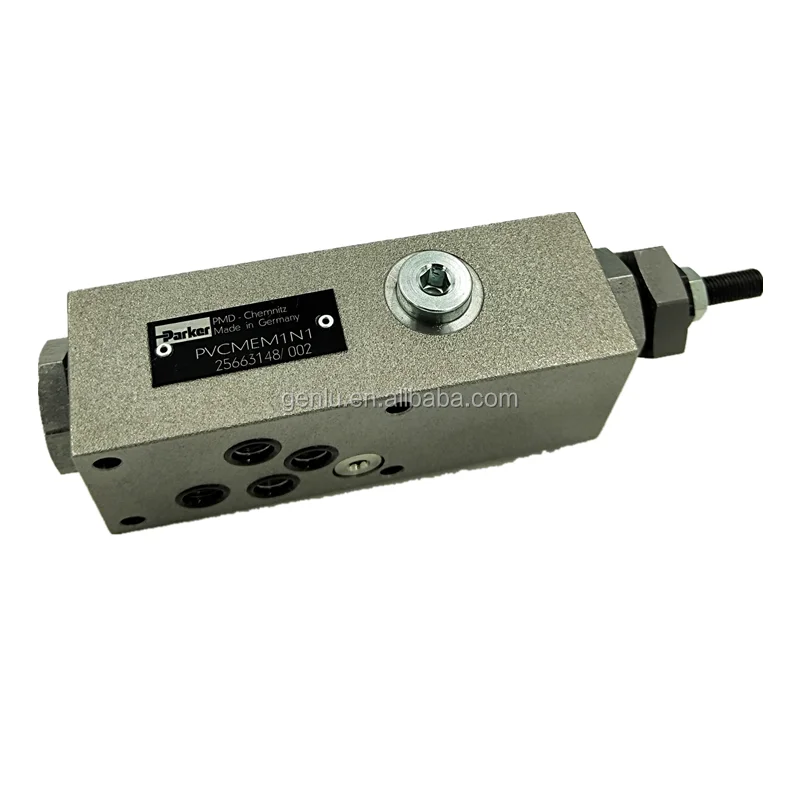
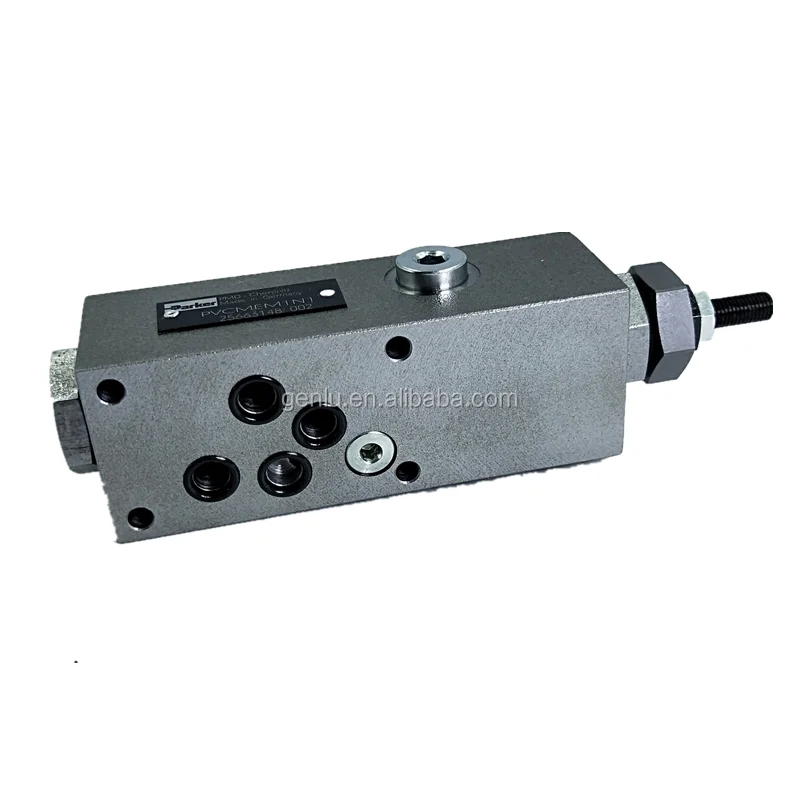
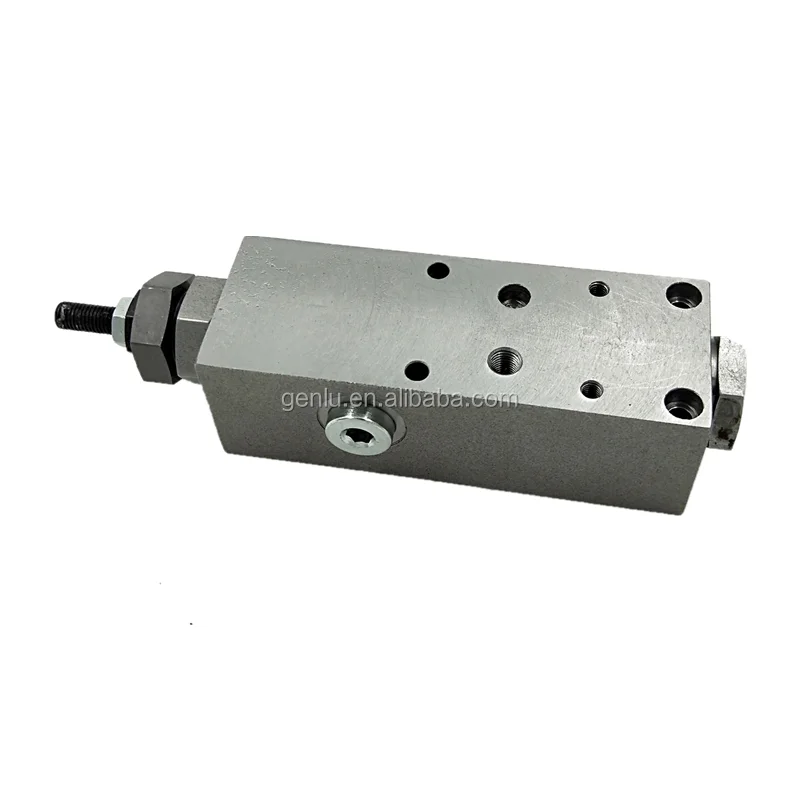
The Parker PVCMEMCN3 is a pump-control compensator associated with Parker PV/PVplus variable-displacement axial piston pumps. It should not be described simply as a conventional hydraulic directional control valve.
Parker’s official PVplus documentation identifies the PVCM family as a range of compensator options for Series 45 and larger pumps, with frame-dependent configurations for PV016–046, PV063–092 and PV140–360. The official catalog identifies the corresponding PVCM configurations as pressure-compensated pump controls.
For the exact PVCMEMCN3 suffix, currently accessible OEM documentation does not provide a complete standalone specification sheet. A third-party Parker parts listing identifies PVCMEMCN3 as a remote compensator / Compensator Design 45. This designation should therefore be cross-checked against the complete pump model and original control code before replacement.
The engineering purpose of the compensator is to influence variable pump displacement according to system pressure demand.
The basic control sequence is:
System Pressure → Compensator Response → Pump Control Pressure → Swash Plate Movement → Variable Displacement
Parker’s PVplus documentation describes the pressure compensator as a control that adjusts pump displacement according to actual system demand to maintain pressure at the required level.
Technical Specifications
PVCMEMCN3
- Manufacturer: Parker Hannifin
- Series: PVCM
- Product Type: Remote Pressure Compensator / Pump Compensator
- Application: Parker PV/PVplus variable-displacement axial piston pumps
- Control Function: Hydraulic pressure compensation
- Compensator Design: Design 45 according to available third-party Parker parts identification
- Pump Displacement: Not a standalone PVCMEMCN3 parameter
- Associated Pump Frame Family: Parker’s official catalog associates the “E” PVCM family with PV140–360 for the corresponding PVCMEMCN1 configuration.
- Rated Pressure: Must be verified against the complete pump model and control configuration
- Peak Pressure: Not applicable as an independent compensator specification
- Maximum Speed: Must be determined from the complete pump configuration
- Control Method: Hydraulic-mechanical pressure compensation / remote pressure compensation
- OEM Weight: Not confirmed in currently accessible Parker OEM documentation
- OEM Material Grade: Not publicly confirmed for this exact part number
Parker PVCM Family Reference
Parker’s official PVplus catalog identifies the following compensator families:
- PVCMAMCN1: PV016–046, pressure compensated – MMC
- PVCMCMCN1: PV063–092, pressure compensated – MMC
- PVCMEMCN1: PV140–360, pressure compensated – MMC
- PVCMARCN1: PV016–046, remote pressure compensator
- PVCMCRCN1: PV063–092, remote pressure compensator
- PVCMERCN1: PV140–360, remote pressure compensator
This confirms that PVCM part numbers are directly associated with specific pump frame sizes and control architectures.
Key Technical Advantages
1. Pressure-Compensated Variable Displacement
A pressure-compensated piston pump reduces displacement as the system approaches the compensator setting.
The fundamental operating logic is:
High Flow Demand → Increased Displacement
Pressure at Setting → Pump Destrokes
This reduces unnecessary flow generation during lower-demand conditions and helps align hydraulic power consumption with actual machine demand.
2. Remote Pressure Control Capability
PVCMEMCN3 is identified by available Parker parts data as a remote compensator.
Remote compensation allows system designers to influence pump pressure response from an external control point rather than relying exclusively on a local mechanical adjustment.
3. Integration With Large PV/PVplus Pump Frames
Parker’s official catalog maps the corresponding “E” PVCM family to the PV140–360 range.
This places the component within large-frame variable-displacement piston-pump control architectures rather than low-power fixed-displacement systems.
4. Precision Mechanical Control Elements
The functional performance of a pressure compensator depends on:
- Spool geometry
- Spool-to-bore clearance
- Spring preload
- Hydraulic orifices
- Sensing passages
- Seal integrity
- Calibration accuracy
- Pump servo response
For replacement applications, dimensional interchangeability alone is insufficient. Functional hydraulic testing is equally important.
5. Direct Influence on Pump Swash-Plate Control
The compensator participates in the hydraulic control loop that changes pump displacement through swash-plate movement.
A compensator fault can therefore manifest as:
- Excessive standby pressure
- Slow destroking
- Pressure overshoot
- Pump control instability
- Excessive energy consumption
- Abnormal displacement response
Engineering Materials and Manufacturing Considerations
Parker’s publicly accessible documentation does not provide a sufficiently detailed material certificate for the exact PVCMEMCN3 part number, so specific alloy grades or heat-treatment claims should not be published as OEM specifications without additional manufacturer confirmation.
For this component, the most important manufacturing factors are functional precision.
Precision Spool
Controlled clearance between the spool and bore affects internal leakage, sensitivity and stability.
Spring Calibration
Compensator setting depends heavily on spring preload and spring characteristics. Replacement calibration should therefore be verified under hydraulic pressure.
Orifice Accuracy
Small control orifices influence damping and response speed. Contamination or dimensional variation can cause delayed compensation or unstable control.
Sealing Integrity
O-rings and sealing surfaces must maintain hydraulic separation under the actual control pressure environment.
Application Areas
Parker PVCM/PVplus compensator technology is applicable to:
- Industrial hydraulic power units
- Injection molding machinery
- Machine tools
- Metal forming presses
- Heavy-duty hydraulic systems
- Construction machinery
- Mobile hydraulic systems
- Material handling equipment
- Marine hydraulic equipment
- Centralized industrial power units
- Large variable-displacement piston-pump systems
The PVCM “E” family is officially associated with Parker PV140–360 configurations for the corresponding design code.
Expert Maintenance Tips
Match the Complete Pump Configuration
Before ordering a replacement, verify:
Pump Model + Displacement + Control Code + Compensator Part Number + Pressure Setting + Remote/Local Configuration
Do not identify the component only as “PVCM”.
Record the Original Pressure Setting
Before removing an existing compensator, record the original adjustment condition and machine standby pressure.
Keep the Control Circuit Clean
Clean:
- Compensator bore
- Control passages
- Orifices
- Remote sensing lines
- Mounting surfaces
- Seal grooves
Inspect the Remote Pressure Line
For remote compensation, verify that the remote sensing circuit is correctly connected and free from:
- Blockage
- Leakage
- Severe restriction
- Air ingress
- Incorrect routing
Verify Pump Destroke Response
After installation, verify that:
Pressure Increase → Pump Destrokes
and:
Pressure Decrease → Pump Restrokes
Abnormal response may indicate problems elsewhere in the servo or pump control mechanism.
Recommended Replacement Test Sequence
Visual Inspection → Dimensional Verification → Seal Inspection → Pressure Setting Test → Remote Signal Test → Dynamic Compensation Test → Pump Destroke Test → Full Working-Condition Simulation
For aftermarket replacements, in-place interchangeability verification and 100% simulated working-condition testing can be used as strong quality-control differentiators, provided these are presented as your company’s validation process rather than as Parker OEM claims.
SEO Model Architecture Recommendation
The original keyword string:
PVCMEMCN3 PVCMCMCN1 PVCMAMCN1 Control Valve PVCM PVCP PVAP PVCR Series Pressure Regulating
should not be treated as one identical product.
A technically cleaner SEO architecture is:
- Primary Product: PVCMEMCN3
- Primary Function: Parker Remote Pressure Compensator
- Related Model: PVCMCMCN1
- Related Model: PVCMAMCN1
- Product Family: Parker PVCM
- Pump Family: Parker PV / PVplus
- Related Control Families: PVCP / PVAP / PVCR — only use these as related search terms where the exact product page confirms their relevance, rather than claiming they are identical to PVCM.
This structure prevents the page from incorrectly merging pressure compensators, remote compensators and other Parker pump-control components, while still capturing the long-tail searches contained in the original title.