


PVP23302R21 Parker PVP23 Axial Piston Pump 23cc 207 bar
| Model Number | PVP23302R21 |
|---|
Product Description
Product Overview
The PVP23302R21 is a core model within the Parker Hannifin PVP23 series of open-circuit variable displacement axial piston pumps. Featuring a cradle swash plate design with pressure compensator control, this pump delivers 23 cc/rev (1.4 in³/rev) displacement for medium-pressure hydraulic applications.
Manufactured to exact Parker OEM specifications, the PVP23302R21 delivers true drop-in interchangeability with original PVP23 series pumps — same SAE B two-bolt mounting flange, SAE B 7/8″ keyed shaft, SAE Code 61 main ports, and pressure compensator control interface. Vickers porting interchange design further enhances installation flexibility.
About the PVP23 and PVP33 Series: The Parker PVP series spans PVP16, PVP23, PVP33, PVP41, and PVP48, covering 16–48 cc/rev. The PVP23 and PVP33 share the same high-strength cast-iron housing platform and two-piece housing construction, differing primarily in displacement (23 vs 33 cc/rev) and input power (19.7 kW vs 27.2 kW @ 1800 rpm). Both use the SAE B two-bolt mounting flange, providing high interchangeability at the mounting interface level.
Every pump undergoes 100% simulated load testing prior to shipment, validating pressure compensator response, volumetric efficiency, and thermal stability under conditions replicating real-world duty cycles.
Technical Specifications
Model PVP23302R21:
Model Code: PVP23302R21
Series: Parker PVP23 (Open Circuit)
Displacement: 23 cc/rev (1.4 in³/rev)
Maximum Continuous Operating Pressure: 207 bar (3000 PSI)
Maximum Intermittent Pressure: 248 bar (3600 PSI)
Pump Delivery at 1800 rpm: 42.0 L/min (11.1 GPM) @ 21 bar (300 PSI)
Minimum Speed: 600 rpm
Maximum Speed: 3000 rpm
Input Power at 1800 rpm (max displacement, 248 bar): 19.7 kW (26.5 HP)
Control Type: Pressure Compensation (Code “02”)
Mounting Flange: SAE B, 2-bolt
Shaft: SAE B 7/8″ keyed, CW rotation (“R” = Right-hand)
Main Ports: SAE 4-bolt split flange (Code 61), 7/16″-14 thread
Case Drain Ports: 3 × SAE-8 straight thread, 3/4″-16UN
Housing Material: High-strength cast iron
Seal Material: Nitrile (NBR)
Optimum Viscosity: 17–180 cSt (max start-up 1000 cSt)
Operating Temperature: -40°C to +71°C
Weight: Approx. 50 kg (net), 68 kg (packaged)
Key Technical Advantages
1. True Drop-in Interchangeability
Every critical interface — SAE B two-bolt mounting flange, SAE B 7/8″ keyed shaft, SAE Code 61 main ports, and pressure compensator control interface — is dimensionally matched to the original Parker PVP23 specification. Vickers porting interchange design further enhances installation compatibility. No adapter plates. No re-plumbing. No control recalibration.
2. High-Strength Cast-Iron Housing with Low Noise Design
The high-strength cast-iron housing provides superior structural damping, and the two-piece housing construction simplifies field service. Combined with optimized internal flow passages, the design effectively suppresses structural vibration and fluid-borne noise, achieving industry-leading noise levels at rated operating conditions.
3. Replaceable Bronze Clad Port Plate and Piston Slipper Plate
The replaceable bronze clad port plate forms a low-friction pairing with the steel cylinder block end face. Metering slot pre-compression and pre-decompression angles are precisely calculated to minimize pressure spikes during high-to-low pressure transitions. The piston slipper plate is also replaceable, significantly reducing long-term maintenance costs.
4. Thru-Shaft Capability
The PVP23 series supports thru-shaft configurations with optional SAE AA two-bolt rear pump interface for tandem pump installations. Rear shaft options include 0.500″ × 0.125″ keyed or 9-tooth 20/40 pitch spline, enabling flexible power distribution in compound hydraulic systems.
5. Pressure Compensation Control with Fast Response
The PVP23302R21 features a pressure compensator that automatically reduces displacement when system pressure reaches the setpoint, maintaining only leakage compensation flow to minimize heat generation and power loss. The large-diameter compensator piston and precision-lapped servo spool deliver fast, stable displacement response with minimal pressure overshoot.
Application Areas
Plastics Machinery: Injection molding machine clamp and injection hydraulic systems (PVP series is widely used in the injection molding industry)
Machine Tools: Hydraulic fixtures, hydraulic chucks, CNC machine hydraulic power units
Material Handling: Forklift hydraulic systems, lift platform drive circuits
Industrial Hydraulic Power Units: Presses, shears, bending machines, and other medium-pressure hydraulic power sources
Oil & Gas Equipment: Wellhead control panel hydraulic power units
Power Generation: Turbine bypass system hydraulic actuators
Expert Maintenance Tips
1. Hydraulic Fluid Cleanliness
PVP series pumps require ISO 4406 18/15 cleanliness or better (16/13 recommended). The pressure compensator servo spool operates with clearances as tight as 2–5 μm and is extremely sensitive to particulate contamination. Install a 10 μm absolute-rated high-pressure filter at the pump inlet. Replace elements at 500 hours after first commissioning, then every 1,000 operating hours or 6 months, whichever comes first.
2. Case Drain Line Requirements
The case drain line must return directly to the reservoir. Maximum permissible case drain back pressure is 1.7 bar (25 psi). The drain outlet must terminate below oil level at all times to prevent air ingestion. The drain line diameter must not be smaller than the pump case drain port size (SAE-8) and must never be tied into the main system return line. Inlet velocity must not exceed 1.5 m/s to prevent cavitation.
3. Pre-Start Priming Procedure
Before first start, fill the pump housing with clean hydraulic fluid through the uppermost case drain port. After installation, turn the drive shaft by hand several revolutions to confirm free rotation without binding. Start at low speed with zero load and run for 5–10 minutes. Verify continuous bubble-free flow from the case drain. Only then apply load.
4. Pressure Compensator Setting and Adjustment
Set the pressure compensator 15–20 bar above the maximum working load pressure, but never exceeding the pump’s 207 bar continuous rating. Adjust only with the system at zero load. Rotate the adjustment screw slowly and verify stable pressure gauge readings before proceeding. Never adjust the compensator while the system is under pressure.
5. Preventive Replacement of Port Plate and Slipper Plate
The bronze port plate and piston slipper plate are replaceable components. Perform preventive inspection at 8,000–10,000 operating hours. Replace the port plate if surface scoring exceeds 0.05 mm depth or if the slipper plate clearance exceeds specification. When replacing the port plate, simultaneously verify cylinder block end-face flatness to ensure mating surface integrity.


Company Profile

Frequently Asked Questions
1.What ls our Main Products?
1.Hydraulic pump
2.Hydraulic valve
3.Hydraulic motor
4.Hydraulic cylinder
5.Hydraulic parts
2. What about the MOQ?
3.What are your advantages?
- Adhere to quality first.
- Support customization, ODM & OEM service.
- 1-year warranty and complete after-sales support.
- Safe and fast shipping worldwide.
- 24-hour online service for your inquiries.
4.Are you a manufacturer? What’s your delivery time?
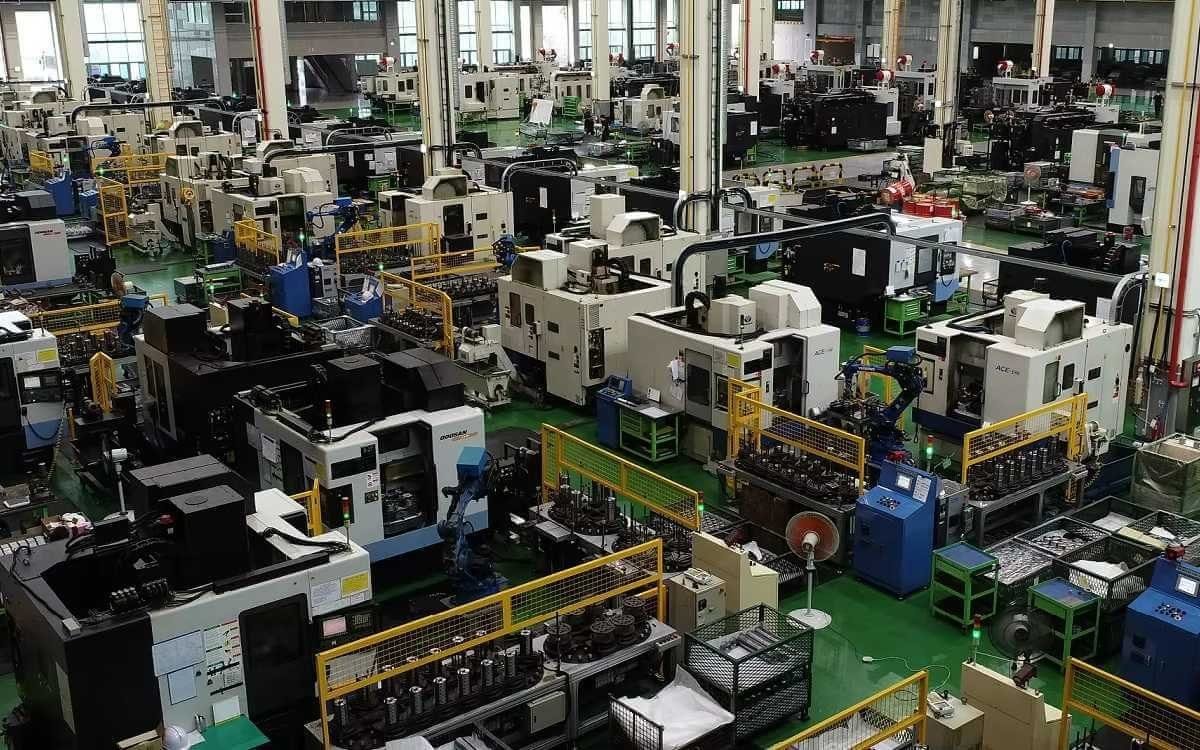
Yes, we are a manufacturer with our own factory.
Common models are in stock, and orders are usually shipped within 1–3 days.
5.Which payment methods are accepted?
We accept T/T, L/C, PayPal, VISA, Western Union, Apple Pay, Google Pay, Afterpay (Clearpay), Klarna, and Trade Assurance.
For full orders: 30% deposit, balance before shipment.
For small/sample orders: full payment in advance.
6.How will you deliver my goods?
We offer flexible shipping options: DHL, UPS, FedEx, TNT, EMS, as well as air or sea freight.
All deliveries ensure door-to-door fast and safe service.
7.How do you inspect and guarantee your products?
All products are tested before shipment to ensure perfect working condition.
We offer a 12-month warranty — if a product fails due to quality issues, we provide free spare parts or repair support.
8.What about after-sales service?
If you encounter any problem during use, please contact your sales manager or our support team at any time.
We will respond quickly and help solve the issue efficiently.
9.What are your main applications?
- Hydraulic systems
- Agricultural machinery
- Construction machinery
- Automobile industry
- Local distributors and maintenance centers
10.Can I get a discount for bulk orders?
Yes. We offer competitive wholesale prices and try our best to give benefits to long-term partners.
Shoot Us An Email
Professional Manufacturer