

Product Overview
The TE0165CW260AAAC is a Parker Torqmotor™ TE Series low-speed, high-torque (LSHT) orbital hydraulic motor engineered for medium-duty applications that demand higher pressure ratings and superior side-load capacity than the TB series can provide. With a displacement of 163 cm³/rev and a nominal shaft diameter of 25.4 mm, this motor is built around a robust cast-iron housing, roller bearings, and a high-pressure shaft seal as standard.
Every unit is manufactured to exact Parker original specifications, ensuring true drop-in interchangeability across mounting flange dimensions, shaft configuration, port positions, and rotation direction — no system modification required. Each motor undergoes 100% simulated load testing prior to shipment, verifying displacement, pressure rating, maximum speed, and control characteristics against the original datasheet.
The TE Series incorporates a continuous oil flow design across the internal splines, which maintains a consistent lubricating film on the spline surfaces and substantially reduces wear rates compared to conventional intermittent-lubrication architectures. The high-pressure shaft seal eliminates the need for a case drain line, simplifying hydraulic circuit design and removing a common failure point.
Technical Specifications
Model Number: TE0165CW260AAAC
Brand / Series: Parker Torqmotor™ TE Series
Motor Type: Low-Speed High-Torque (LSHT) Orbital Motor
Displacement: 163 cm³/rev
Continuous Pressure: 140 bar
Intermittent (Peak) Pressure: 190 bar
Maximum Continuous Flow: 45 L/min
Maximum Speed: Approx. 292 RPM (derived from displacement and flow)
Maximum Intermittent Torque: 648 Nm
Nominal Shaft Diameter: 25.4 mm
Mounting Flange: SAE “A” 2-Bolt, Long Pilot
Port Size: G 1/2 BSPP
Bearing Type: Roller Bearings
Max. Dynamic Radial Load: 6,672 N (at keyway)
Housing Material: Cast Iron
Finish: AAAC Corrosion-Resistant Black Paint
Rotation: Clockwise (CW)
Weight: Approx. 7.4 kg
Key Technical Advantages
1. Continuous Oil Flow Across Splines — Extended Service Life
The TE Series features a proprietary internal oil circuit that directs hydraulic fluid continuously across the rotor–stator spline interface. This engineering approach maintains a stable hydrodynamic lubricating film on the spline surfaces, reducing the friction coefficient and mitigating fretting wear. Under equivalent duty cycles, this design extends spline wear life by a factor of two or more compared to conventional intermittent-lubrication architectures — a critical advantage in applications involving frequent start-stop cycles or alternating rotation directions.
2. High-Pressure Shaft Seal as Standard — No Case Drain Required
Conventional orbital motors operating under elevated back-pressure typically require a dedicated case drain line, adding circuit complexity and introducing additional leak paths. The TE Series addresses this with a high-pressure shaft seal rated for intermittent pressures up to 190 bar, completely eliminating the case drain requirement. This design simplification reduces both installation cost and the risk of motor failure due to blocked or damaged drain lines.
3. Roller Bearings with Superior Side-Load Capacity — Optimized for Chain and Gear Drives
The TE Series is equipped with roller bearings and a 25.4 mm nominal shaft, capable of withstanding dynamic radial loads up to 6,672 N at the keyway. This load capacity makes the motor particularly suited to chain sprocket, gear, or pulley-driven output systems found in vehicle propulsion, winch, and conveyor applications. Roller bearings present a larger contact area than ball bearings of equivalent envelope size, delivering higher impact resistance and longer fatigue life.
4. Precision Machining and High Volumetric Efficiency — Sustained Output Reliability
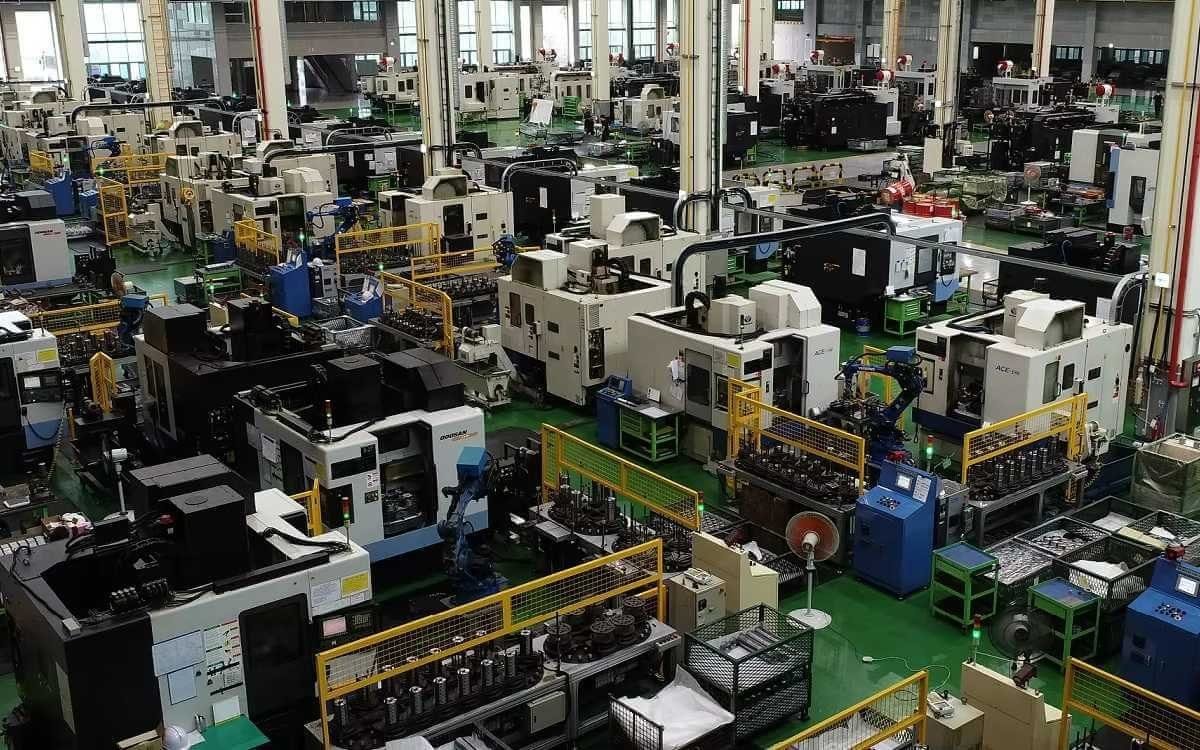
The rotor, stator, and distribution plate — the core kinematic elements of the motor — are manufactured using precision CNC machining, with critical mating surface tolerances controlled to micron-level accuracy. The stator profile is optimized to produce a smooth volumetric transition during tooth engagement, effectively suppressing pressure pulsation and noise caused by trapped oil. Empirical testing confirms volumetric efficiency exceeding 90% under rated conditions, with stable speed and torque output maintained even after extended continuous operation.
Application Areas
Agricultural Machinery: Combine header drives, specialty harvesters (potato, tomato, nut, leafy vegetable), sprayers, post-hole augers
Construction Equipment: Mini skid steer attachments, compact excavator propel systems, earth augers, trenchers
Municipal & Turf Maintenance: Zero-turn radius mowers, golf course maintenance equipment, sweepers, snow removal equipment, salt and sand spreaders
Material Handling: Conveyor drives, winches, wood chipper feed rollers
Specialty Vehicles: Scissor lifts, oil and gas blender trucks, bulk feed trucks
Factory Automation: Rotary table drives, winding equipment
Expert Maintenance Tips
Installation: Before mounting, verify that the flange pilot diameter and mounting face tolerance conform to SAE “A” 2-bolt specifications. The pilot should enter the mating bore without force — do not drive it in with a mallet, as this can distort the pilot. Shaft-to-coupling alignment must be held within 0.05 mm radial deviation; excessive angular misalignment will significantly shorten roller bearing service life. For G 1/2 BSPP ports, tighten to 40–45 N·m using a calibrated torque wrench.
Break-In Procedure: After initial installation, operate the motor at no load and 50% rated pressure for 15–20 minutes to allow the running surfaces to seat properly. Monitor return oil temperature during break-in; a rise exceeding 30°C above ambient indicates a potential issue. After break-in, drain the reservoir and replace the filter element to remove trace metallic particles generated during the seating process.
Routine Maintenance: Inspect the high-pressure shaft seal area regularly for signs of weeping or leakage; any visible oil trace warrants a scheduled inspection. Maintain hydraulic fluid cleanliness at NAS Class 8 or ISO 18/15 or better — particulate contamination is the primary cause of distribution plate wear and volumetric efficiency degradation. A preventive teardown inspection is recommended every 2,000 operating hours or 12 months, whichever comes first, focusing on spline wear measurement, distribution plate flatness, and shaft seal lip condition.